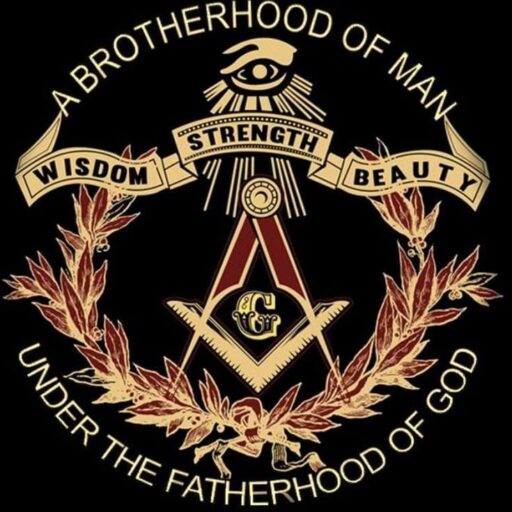
The Full Meaning of “Illuminati”: Etymology, History, and the Secret Society That Changed the World
By info@newworldorderofficial.com / April 24, 2026 / No Comments / Uncategorized
The Full Meaning of "Illuminati": Etymology, History, and the Secret Society That Changed the World
Part 1: The Etymology — What the Word Actually Means
Let us begin with the word itself, stripped of conspiracy and conjecture.
Illuminati is the plural form of the Latin word illuminatus, which means literally “enlightened” or “one who has been illuminated” . The root verb, illuminare, means “to light up” or “to cast light upon” . Its past participle, illuminatus, describes someone who has received light—not physical light, but intellectual or spiritual illumination.
The term first entered the English language in the 1590s . It was originally used to describe a 16th-century Spanish sect known as the Alumbrados (Spanish for “the enlightened ones”) . These were religious mystics who claimed to have received direct, personal illumination from the Holy Spirit—bypassing the need for the established Church. They were considered heretics by the Inquisition.
Over time, the term was applied to other groups on the European continent who made similar claims to superior spiritual or intellectual knowledge . By the late 18th century, the word had become most strongly associated with a specific secret society: the Bavarian Illuminati, founded in 1776 .
Today, Collins Dictionary defines “illuminati” in three ways :
Persons possessing, or claiming to possess, superior enlightenment
Any of various societies or sects (historical or conjectured) of such people, usually secret and often thought to wield furtive influence over world affairs
A name given to different religious societies or sects because of their claim to superior enlightenment
: Illuminati full meaning — From Latin “illuminatus” meaning “enlightened ones”; originally applied to mystics claiming direct divine illumination.
Part 2: The Predecessors — Groups That Came Before
Before the famous Bavarian Illuminati, the name had already been claimed by several other movements.
The Alumbrados (16th Century Spain)
The first group to bear the name “Illuminati” in any meaningful sense were the Alumbrados of Spain . Active in the early 16th century, they were mystical reformers who claimed to have received direct communication from the Holy Spirit. They believed that they had achieved a state of spiritual perfection where sin was impossible and that ordinary church rituals—confession, mass, even prayer—were unnecessary for those who had reached this state.
The Spanish Inquisition was not amused. Many Alumbrados were arrested, tried, and punished for heresy. Their “enlightenment” was judged to be dangerous deception .
The Rosicrucians (17th Century Europe)
In the early 17th century, manifestos appeared across Europe announcing the existence of a secret order called the Rosicrucians (Brotherhood of the Rose Cross). These documents promised a “universal reformation of mankind” based on esoteric knowledge and mystical Christianity. The Rosicrucians claimed to be bound to secrecy for 100 years . While it is debated whether an actual Rosicrucian order existed in the 17th century (rather than being a literary hoax), the movement influenced many later secret societies, including elements of Freemasonry and, indirectly, the Bavarian Illuminati.
History of the word Illuminati — First used for Spanish Alumbrados (1500s), then for various mystical and rationalist groups across Europe.
Part 3: The Bavarian Illuminati — The Most Famous Incarnation (1776-1790)
When most people hear “Illuminati,” they are thinking of this group—whether they know it or not.
The Founder: Adam Weishaupt
The Bavarian Illuminati was founded on May 1, 1776, by Adam Weishaupt, a 28-year-old professor of canon law at the University of Ingolstadt in the Electorate of Bavaria (modern-day Germany) .
Weishaupt had been educated by Jesuits, but he became increasingly frustrated with what he saw as the oppressive control of religious authorities over intellectual life and politics . As a child of the Enlightenment—the 18th-century intellectual movement that championed reason, science, and individual liberty over tradition, faith, and absolute monarchy—Weishaupt dreamed of reshaping society.
The Original Name: Perfectibilists
Before calling themselves “Illuminati,” Weishaupt’s group first called themselves the “Perfectibilists” (from “perfectibility”) . This name reflected their core belief: that humans are perfectible through education, reason, and the removal of corrupting influences like superstition and tyranny. Weishaupt later admitted he changed the name because “Perfectibilists” sounded too strange.
The Symbol: The Owl of Minerva
The Bavarian Illuminati adopted the Owl of Minerva as their symbol . Minerva was the Roman goddess of wisdom, and her owl represented knowledge, reason, and the pursuit of truth. The choice reflects their Enlightenment values.
The Goals: Reason, Liberty, and the Overthrow of Tyranny
What did the Illuminati actually want to achieve?
According to the Encyclopaedia Britannica, Weishaupt aimed to “overthrow existing government and religious institutions and replace them with rule by a secretive committee charged with promoting morality and virtue” . Another goal was to “replace Christianity with a religion of reason” .
The order’s general statutes stated their purpose as opposing “superstition, obscurantism, religious influence over public life, and abuses of state power” .
Weishaupt’s ambition was audacious: he wanted to cause a revolution in the way the world operated, replacing monarchical tyranny and religious superstition with rational, enlightened governance.
The Organization: Jesuit Hierarchy Meets Masonic Ritual
Weishaupt borrowed organizational techniques from two sources :
1. The Jesuits: Weishaupt admired the Jesuits’ internal discipline, hierarchy, and system of mutual surveillance. Members pledged obedience to their superiors .
2. The Freemasons: In 1777, Weishaupt joined a Masonic lodge in Munich. He realized that Freemasonry’s existing network of lodges across Europe could serve as a recruiting ground for his Illuminati. From 1778 onward, Illuminati members began infiltrating Masonic lodges, often gaining commanding positions .
Members were divided into three main classes :
First Class: The Nursery
Novices
Minervals
Lesser Illuminati
Second Class: Freemasonry
Ordinary Freemasons
Scottish Freemasons
Scottish Knights
Third Class: The Mysteries
Priest
Regent
Magus
King
Each member was assigned a classical code name. Weishaupt called himself “Spartacus” (after the Roman slave-rebel who led a massive uprising). His second-in-command, Adolf Franz Friedrich von Knigge, was “Philo” . All internal correspondence was written in cipher, and towns and provinces were given arbitrary fictional names to increase mystification .
The Membership: 2,000 Intellectuals
At its peak in the early 1780s, the Bavarian Illuminati had fewer than 2,000 members —not millions, not thousands, but a few hundred to at most two thousand.
Members were recruited primarily from among “young men of wealth, rank, and social importance” . They came from a wide geographic area, “extending from Italy to Denmark and from Warsaw to Paris” .
Notable claimed members include:
Johann Wolfgang von Goethe (Germany’s greatest literary figure)
Johann Gottfried von Herder (philosopher and writer)
Johann Bode (astronomer)
Friedrich Nicolai (writer and bookseller)
Friedrich Jacobi (philosopher)
Possibly Wolfgang Amadeus Mozart and Friedrich Schiller
The Fall: Banned in 1785
The Illuminati’s downfall was not caused by a heroic conspiracy-buster or a secret enemy. It was caused by arrogance and overconfidence.
Members began “talking a little bit too openly about what they were doing and what their plans are” . The Bavarian government—intensely conservative and intensely Catholic—began to worry.
Between 1784 and 1787, the Bavarian government issued a series of edicts banning all secret societies . In 1785, police raided the home of a senior Illuminatus and seized documents that exposed the entire operation .
Weishaupt was stripped of his professorship and banished from Bavaria . Some members were imprisoned; others were driven from their homes.
After 1785, “the historical record contains no further activities of Weishaupt’s Illuminati” . By 1790, the order had effectively ceased to exist.
Bavarian Illuminati meaning — Enlightenment secret society (1776-1790) founded by Adam Weishaupt to promote reason and oppose superstition; banned by Bavarian government.
Part 4: The Conspiracy Theory — How the Illuminati “Survived”
If the Illuminati died in the 1790s, why does everyone think they still rule the world?
The answer lies in two books published in 1797—seven years after the Illuminati had disbanded.
The French Priest: Abbé Barruel
In 1797, a French priest named Augustin Barruel published a book arguing that the French Revolution (which had terrified Europe’s monarchies) was not a spontaneous uprising of the people but a deliberate conspiracy orchestrated by the Illuminati and the Freemasons .
The Scottish Professor: John Robison
That same year, a Scottish physicist and professor named John Robison published Proofs of a Conspiracy Against All the Religions and Governments of Europe . Robison was a respected academic who had worked with James Watt on early steam technology. But following the French Revolution, he became convinced that radical Enlightenment groups had infiltrated Freemasonry and were planning to destroy all governments and religions.
Both Barruel and Robison wrote independently, yet arrived at the same conclusion: the Illuminati were behind the French Revolution .
The Problem: No Evidence
Neither man had any actual evidence. Both were motivated by the desire to explain a terrifying historical event through a tidy conspiracy narrative. The French Revolution was genuinely shocking—an ancient monarchy overthrown, a king and queen executed, the Catholic Church violently suppressed. For conservatives, it was easier to believe this was the work of a small, evil cabal than to accept that ordinary people had genuine grievances against monarchy and aristocracy.
The Birth of the Modern Conspiracy
As the BBC has noted, this was “perhaps the world’s first conspiracy theory” . And like many first attempts, it was wrong.
Yet the narrative stuck. Once the idea that the Illuminati had survived and infiltrated was planted, it took on a life of its own.
Illuminati conspiracy theory origin — Began with Barruel and Robison in 1797, blaming the Illuminati for the French Revolution without evidence.
Part 5: The Fictional Revival — The Illuminatus! Trilogy (1975)
The most important moment in the modern Illuminati myth came nearly 200 years later, in 1975.
The Authors: Shea and Wilson
Robert Shea and Robert Anton Wilson published The Illuminatus! Trilogy, a three-volume novel consisting of The Eye in the Pyramid, The Golden Apple, and Leviathan .
The books were fiction. They were satirical, postmodern novels written by members of a neo-pagan group called the Discordians, who worshipped the goddess of chaos, Eris, through “cosmic jokes” .
The Plot: Absurd and Intentionally Confusing
The trilogy mixes fact, fantasy, and wild invention. In the story, the Illuminati are not just a rationalist society but a shape-shifting, immortal conspiracy that includes everything from the Bavarian Illuminati to Nazi occultists to H.P. Lovecraft’s Cthulhu Mythos gods .
The plot involves talking dolphins, a golden submarine, the assassination of JFK, ancient Atlantis, chaos magic, and a secret plan to achieve immortality through mass human sacrifice at a rock concert.
The Problem: Readers Thought It Was Real
The books were written as satire. But many readers did not realize this. Some claimed that Shea and Wilson were revealing a real conspiracy under the guise of novels.
Wilson himself was a believer in “reality tunnels”—the idea that different people see different realities based on their beliefs. He was fascinated by conspiracy theories and sometimes played a “game” of treating them as if they were true to see what happened. But the novels were fundamentally works of fiction.
Nevertheless, the “serious” conspiracy theorists took the fictional elements and ran with them. The Discordian satire—the owl, the pyramid, the eye, the 23 enigma—was absorbed into conspiracy culture as “evidence” of the Illuminati’s existence .
The Legacy
Everything you think you know about the Illuminati from modern pop culture—the all-seeing eye, the pyramid, the 23, the celebrity worship, the “New World Order”—either originated with or was massively amplified by Shea and Wilson’s satirical novels.
Decades later, Dan Brown’s Angels and Demons (2000) would borrow heavily from the same mythos, cementing the Illuminati as a pop culture staple .
Modern Illuminati myth origin — 1975 satirical novel “The Illuminatus! Trilogy” turned a dead 18th-century society into a global conspiracy.
Part 6: The Pop Culture Illuminati — What the Word Means Today
In contemporary usage, “Illuminati” has come to refer to something almost entirely disconnected from the historical Bavarian society.
The Conspiracy Version
In conspiracy communities, the Illuminati are described as a global cabal of the world’s most powerful people—politicians, bankers, corporate CEOs, celebrities—who secretly control world events from behind the scenes. They are said to be working toward a “New World Order” —a single totalitarian global government.
Proponents of this theory point to symbols on the U.S. one-dollar bill (the Eye of Providence and the unfinished pyramid), the logos of major corporations, and the lyrics and music videos of pop stars as “evidence” of Illuminati influence.
The Pop Culture Version
In rap music, Hollywood, and social media, “Illuminati” has become shorthand for:
A secret elite that controls the entertainment industry
A group that celebrities “sell their souls to” in exchange for fame
A mysterious, all-powerful organization that operates in the shadows
Artists as diverse as Kanye West, Beyoncé, Jay-Z, Madonna, and Taylor Swift have been accused (falsely) of being Illuminati members .
The Problem: No Evidence
There is no evidence that any actual organization matching this description exists. As the Encyclopaedia Britannica notes, the Bavarian Illuminati “was banned by an edict of the Bavarian government in 1785” and “after 1785 the historical record contains no further activities” .
The modern Illuminati is a conspiracy theory—a narrative, not a reality.
: Modern meaning of Illuminati — A pop culture conspiracy theory about a global cabal controlling world events; no evidence such an organization exists.
Conclusion: The Many Meanings of a Single Word
What is the full meaning of “Illuminati”?
Linguistically, it means “the enlightened ones”—persons who claim superior intellectual or spiritual insight.
Historically, it refers to several groups: the Spanish Alumbrados (1500s), the mystical Rosicrucians (1600s), and most famously the Bavarian Illuminati (1776-1790)—a real secret society of Enlightenment rationalists who sought to overthrow superstition, monarchy, and religious tyranny.
In conspiracy lore, it refers to a mythical, all-powerful global cabal that secretly rules the world—a narrative born from 1797 propaganda and 1975 satire, with no basis in historical fact.
In pop culture, it is shorthand for hidden power, celebrity secrets, and mysterious symbols hidden in plain sight.
The word “Illuminati” has traveled a remarkable journey: from a 16th-century Spanish mystical sect to an 18th-century German secret society to a 21st-century internet meme. Along the way, it has accumulated meanings, lost others, and gained a cultural weight far beyond its original Latin root.
Understanding the full meaning of “Illuminati” requires distinguishing between these layers. The historical Illuminati were real. The global conspiracy Illuminati is not.
Frequently Asked Questions
Q: What does “Illuminati” mean in Latin?
A: “Illuminati” is the plural of the Latin word illuminatus, meaning “enlightened” or “the enlightened ones” .
Q: What is the full meaning of Illuminati?
A: The full meaning has three layers: (1) linguistically, “enlightened ones”; (2) historically, the Bavarian Illuminati (1776-1790), a real Enlightenment secret society; (3) in conspiracy theory, a mythical global cabal controlling world events .
Q: Who founded the Bavarian Illuminati?
A: Adam Weishaupt, a professor of canon law at the University of Ingolstadt in Bavaria, founded the order on May 1, 1776 .
Q: What did the original Illuminati believe?
A: They were Enlightenment rationalists who wanted to oppose “superstition, obscurantism, religious influence over public life, and abuses of state power.” They aimed to replace Christianity with a “religion of reason” and overthrow monarchical governments .
Q: How many members did the Illuminati have?
A: At its peak, the Bavarian Illuminati had fewer than 2,000 members .
Q: Is the Illuminati real?
A: The historical Bavarian Illuminati was real but has been defunct since 1790. The modern conspiracy theory version—a global cabal controlling world events—is not real .
Q: Does the Illuminati still exist today?
A: yes. The historical Illuminati wasby the Bavarian government in 1785 and ceased all activities by 1790. legitimate organization by that name exists today .
Q: Why do people think the Illuminati control the world?
A: This belief originated from two 1797 books (by Barruel and Robison) that falsely blamed the Illuminati for the French Revolution. It was later popularized by the 1975 satirical novel The Illuminatus! Trilogy .
Q: What is the symbol of the Illuminati?
A: The Bavarian Illuminati used the Owl of Minerva (goddess of wisdom) as their symbol. The “Eye of Providence” (all-seeing eye) and pyramid are not Illuminati symbols—they appear on the U.S. one-dollar bill and were not used by the historical order .
s:
Online Etymology Dictionary – Illuminati: Linguistic origin and historical usage from 1590s to present. (Source: etymonline.com)
Encyclopaedia Britannica – Bavarian Illuminati: Comprehensive historical entry on the founding, doctrine, rise, and fall of Weishaupt’s society. (Source: britannica.com)
Encyclopaedia Britannica – What Does the Name Illuminati Refer To? Direct answer to the question of definition and real existence. (Source: britannica.com)
Collins Dictionary – Illuminati Definition: Dictionary definition of the term in modern English. (Source: collinsdictionary.com)
Dictionary.com – What Exactly Does “Illuminati” Mean? Accessible explanation of the Bavarian Illuminati and its modern usage. (Source: dictionary.com)
Google Books – Proofs of a Conspiracy by John Robison (1797): Primary source of the first major Illuminati conspiracy theory. (Source: books.google.com)
IsisCB Explore – British Conservatism and the Illuminati (2014): Academic article on the 1797 conspiracy theories. (Source: data.isiscb.org)
The Encyclopedia of Science Fiction – Robert Anton Wilson: Entry on the author of The Illuminatus! Trilogy and the fictional revival of the Illuminati myth. (Source: sf-encyclopedia.com)
Wikipedia – Illuminés de Bavière: French Wikipedia entry with detailed organizational structure of the Bavarian Illuminati. (Source: fr.wikipedia.org)
Wikipedia – Illuminatus! Trilogy: Entry on the 1975 satirical novel that shaped modern Illuminati conspiracy theories. (Source: fr.wikipedia.org)