Is Freemasonry Good or Bad? A Balanced Look at the World’s Most Debated Fraternity
By info@newworldorderofficial.com / April 24, 2026 / No Comments / Uncategorized
Is Freemasonry Good or Bad? A Balanced Look at the World’s Most Debated Fraternity
For nearly 300 years, one question has divided families, sparked political movements, and fueled countless conspiracy theories: Is Freemasonry good or bad?
Ask a Freemason, and they will tell you the organization is a force for charity, friendship, and self-improvement. Ask the Catholic Church, and they will tell you its principles are “irreconcilable” with Christian faith. Ask a conspiracy theorist, and they will warn of secret world domination plots. Ask a historian, and they will point to a complex 300-year legacy that defies simple labels.
The truth, as with most things, is not black and white. Freemasonry has done remarkable good in communities worldwide. It has also faced legitimate criticism for secrecy, elitism, and historical exclusivity. And it has been the victim of spectacular hoaxes that continue to distort public perception.
Part 1: The Case for “Good” – Charity, Community, and Brotherhood
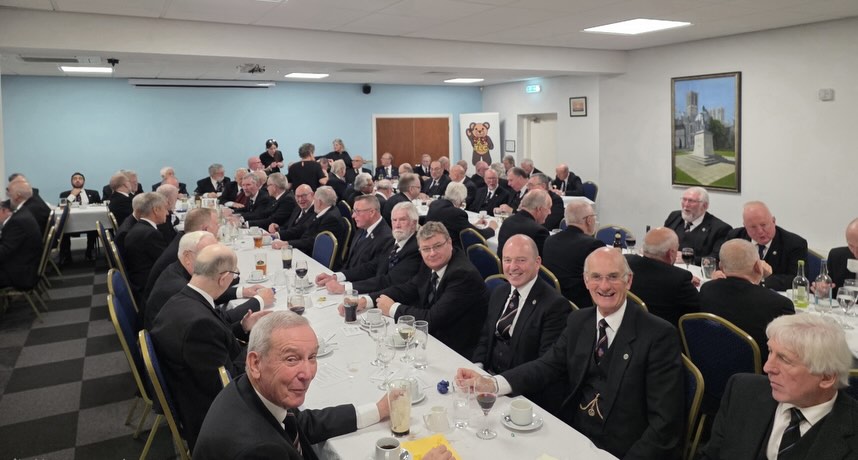
Let us begin with what Freemasonry itself claims to be: a fraternal organization dedicated to charity, self-improvement, and brotherly love.
Massive Charitable Giving
The most undeniable argument in Freemasonry’s favor is its charitable record. Freemasonry is one of the largest charitable givers in the world.
In 2023 alone, Freemasons in England and Wales contributed more than £51.7 million to deserving causes . This is not a one-time figure. Masonic charitable foundations consistently award millions annually to hospices, disaster relief, medical research, and local community organizations.
But the giving is not just financial. Freemasons perform more than 18.5 million hours of volunteer work every year . This represents an extraordinary commitment of time and labor—not just writing checks, but showing up.
Real Community Impact
The charitable work is not abstract. Consider these concrete examples:
In Essex, England, Freemasons launched the Cross Keys Community Fund. In just two years, this volunteer-driven initiative has supported nearly 100 local schools, charities, care homes, and grassroots causes. They organize carol concerts in care homes, provide essential supplies to vulnerable families, and work with stroke groups, SEN support networks, and mental health advocates. In December 2024, the fund was added to Thurrock Council’s Mayoral Roll of Honour—a civic salute to those who have made a measurable difference .
In North Wales, Freemasons donated £2,000 to the Samaritans, the suicide prevention charity. As one Masonic leader explained, “Service has always been a core principle of Freemasonry. Our members play a crucial role, dedicating both their time and resources, actively engaging in volunteer work, to make a significant impact in our communities” .
In the United States, Masonic philanthropy includes the Shriners Hospitals for Children, which provides free medical care to children regardless of ability to pay—a system funded almost entirely by Masonic donations.
A Network of Mutual Support
For members, Freemasonry offers something less measurable but equally valuable: community.
Michael, a Freemason interviewed by the BBC, describes the fraternity this way: “It gives you a moral code in terms of bringing out the best side of human nature” .
Anna, a female Freemason in one of England’s women-only lodges, describes membership as “a journey to learn about yourself.” She notes that Freemasonry provides “reciprocal tenderness and affection” amongst equals .
Promoting Tolerance Across Faiths
In a world increasingly divided by religious sectarianism, Freemasonry offers a model of interfaith cooperation. The organization requires belief in a Supreme Being but does not specify which one. Christians, Jews, Muslims, Hindus, and others meet in the same lodge, pray under the common name of the “Great Architect of the Universe,” and focus on what unites them rather than what divides them.
For many, this is a profound good—a practical demonstration that people of different faiths can work together in harmony without compromising their individual beliefs.
Is Freemasonry good for charity? Yes—Freemasons donated £51.7 million and volunteered 18.5 million hours in 2023 alone.
Part 2: The Case for “Bad” – Religious Opposition and Secrecy
Now, let us examine the arguments against Freemasonry. They fall into three main categories: religious opposition, concerns about secrecy and elitism, and historical controversies.
The Catholic Church’s Uncompromising Position
The most persistent and influential opposition to Freemasonry comes from the Roman Catholic Church. This is not a fringe view—it is official doctrine, reaffirmed repeatedly over nearly 300 years.
In January 2025, the Metropolitan Archbishop of Accra, Most Rev. John Bonaventure Kwofie, reiterated the Church’s position in the strongest possible terms: “You can’t be a true Catholic and a Freemason at the same time” .
The Archbishop referenced the 1983 declaration by the Congregation for the Doctrine of the Faith (led at the time by Cardinal Joseph Ratzinger, the future Pope Benedict XVI), which stated that “Masonic principles are irreconcilable with the doctrine of the Church” and that Catholics who join Masonic associations are in “a state of grave sin” and cannot receive Holy Communion .
Why the Church Objects
The Catholic objections are theological and profound. Archbishop Kwofie explained:
Religious indifferentism: Freemasonry equates Jesus Christ with other religious figures such as Buddha and Krishna. For the Church, this is unacceptable. Jesus is not one path among many—He is the path.
Prayer without Christ: Freemasons address prayers to the “Great Architect of the Universe” instead of through Christ. The Church teaches that all prayer should be offered through Jesus.
Equality of holy books: Freemasonry places the Bible on equal footing with other religious texts. The Archbishop called this “absolutely preposterous” .
His conclusion was blunt: “Freemasonry wants the destruction of Christianity” .
This is not a new position. Pope Leo XIII’s 1884 encyclical Humanum Genus declared that Freemasons aimed at “the utter overthrow of that whole religious and political order of the world which the Christian teaching has produced” .
Secrecy and the Perception of Elitism
Beyond religious opposition, Freemasonry faces criticism for its secrecy and perceived elitism.
As The Guardian columnist Dawn Foster wrote in a pointed critique: “No one joins the masons for the handshakes. It must be for the benefits it can bring” .
Foster’s concern centers on the fact that Masonic membership is often kept private. If the organization is harmless, she asks, “why the defensiveness?” She notes that police officers, politicians, and journalists have been members of Masonic lodges—raising questions about whether membership confers unfair advantages in careers and public service .
She cites former Scotland Yard commander Brian Paddick, who described in his autobiography how fellow officers changed their behavior toward him when they learned he was a Mason—leading him to stop attending lodge meetings out of discomfort .
Historical Exclusivity
Freemasonry has also faced criticism for historical exclusivity. For most of its history, regular Freemasonry admitted only men and, particularly in the United States, effectively excluded Black men (leading to the creation of separate Prince Hall Masonry).
While women-only and mixed-gender Masonic orders now exist, and while many Grand Lodges now recognize Prince Hall Masonry, the historical record of exclusion remains a valid criticism.
Why is Freemasonry bad according to the Catholic Church? Masonic principles are declared “irreconcilable” with Church doctrine due to religious indifferentism and naturalism.
Part 3: The Taxil Hoax – The Satanic Lie That Refuses to Die
One of the most remarkable chapters in the “Is Freemasonry bad?” debate involves a spectacular fraud that continues to distort public perception more than a century later.
The Arch-Liar of the Age
Leo Taxil was a French con artist. In 1885, he announced his conversion to Catholicism and began publishing books claiming that Freemasonry was a worldwide satanic cult .
His most outrageous invention was “Diana Vaughan”—a supposed high-ranking Masonic devil-worshipper who had personally encountered Lucifer. Taxil wrote lurid accounts of Masonic rituals involving human sacrifice, devil worship, and the murder of Christian missionaries .
These books sold hundreds of thousands of copies. Taxil became wealthy. Even prominent figures like Bismarck and Emperor William I were drawn into the controversy .
The Confession
On April 1, 1897—All Fools’ Day—Taxil called a press conference in Paris. He announced that his conversion was a fraud, that all his books were complete fabrications, and that he had published them specifically to embarrass the Catholic Church.
His speech was extraordinary: “Ladies and Gentlemen: Don’t be angry with me. I have fooled you all these years. The stories of Masonry and devil-cult and devil-brides, etc., which I palmed off on you in a hundred books, pamphlets and lectures were all stuff and nonsense. They were lies, lies, and nothing but lies, invented for the purpose of testing popular credulity” .
Diana Vaughan? She was the name of his typist. The satanic rituals? Pure fiction. The “devil-pope Pike”? An American gentleman who had never met Lucifer.
Taxil’s motive? He had applied to join the Freemasons and been rejected .
The Meme That Refuses to Die
Despite Taxil’s public confession—documented in the contemporary press and analyzed by scholars such as A.E. Waite in Devil Worship in France (1882)—the hoax refuses to die .
Even today, books and websites claim that Freemasons worship Satan or Lucifer. These claims trace back to a single French con artist who admitted—on the record, at a public press conference—that he made the whole thing up.
A.E. Waite, writing in the 1880s, described this as “the meme that refuses to die”—a phrase that remains apt 140 years later .
Do Freemasons worship the devil? No—this originated from the 1897 Taxil Hoax, a fraud admitted by its perpetrator after he was rejected for Masonic membership.
Part 4: The Morgan Affair – History’s Most Damning Incident
Beyond the Taxil Hoax, there is one historical event that continues to haunt Freemasonry’s reputation: the Morgan Affair of 1826.
The Disappearance
William Morgan was a bricklayer in Batavia, New York, who claimed he was preparing to publish a book revealing Masonic secrets. Before the book could be published, Morgan was arrested on trumped-up charges, visited in jail by several Masons, released into their custody, and never seen again .
The public believed Morgan had been murdered by Masons to prevent his exposé. Although no body was ever found and no one was convicted of murder, the Masons’ refusal to cooperate with the investigation—citing their oath of secrecy—fueled public outrage.
The Anti-Masonic Party
The “Morgan Affair” ignited a firestorm. Anti-Masonic newspapers flourished. Politicians saw the issue’s vote-catching potential. In 1831, the Anti-Masonic Party held the first national nominating convention in U.S. history—marking a significant moment in American political development .
The party platform condemned Masonry for its secrecy, exclusivity, and undemocratic character.
While the party declined by the late 1830s, the damage to Freemasonry’s reputation was permanent. For many Americans, the fraternity became synonymous with cover-ups and elite privilege.
A Contemporary Concern
Even in 1876—fifty years after the Morgan Affair—a Masonic periodical published a striking self-criticism. Under the headline “Is Masonry Doing Its Duty?” , an editor wrote:
“It is conceded that Freemasonry, with its large membership, is capable of wielding a vast influence; and with the wealth and social standing of its members, it might do immense good. But what is it doing? Has it provided a Home for the aged and infirm? Has it made provision for the education and support of indigent orphans? … Is it doing anything worthy of its means and members?”
The editor concluded that Masonry was not performing its proper work, adding: “Is it any wonder that anti-Masonic associations are formed, and anti-Masonic papers issued?”
This remarkable self-criticism—from within Freemasonry itself—demonstrates that the fraternity has long grappled with the gap between its principles and its practices.
: Morgan Affair Freemasonry controversy – The 1826 disappearance of a man threatening to expose Masonic secrets sparked the Anti-Masonic Party and damaged Masonic reputation for decades.
Part 5: The Internal Masonic Defense – “We Make Good Men Better”
What do Freemasons say in their own defense?
Denying Corruption
Masons strongly reject allegations of using the fraternity for personal gain. As one Masonic leader told the BBC, “The perception is that Freemasons pat each other on the back and look after each other in ways other friendship groups don’t. That is a complete myth. It is frowned upon. It is not to be used for your own personal benefit. It really is for others” .
A female Mason added: “I don’t know a single other woman who’s worked in [my industry]. It has never helped me [in my career]. I think in the past there probably have been cases of [nepotism] but I’ve never known of a single case in the women’s Freemasons” .
Secrecy vs. Privacy
Masons argue that there is a difference between secret and private.
Masonic buildings are clearly marked. Charity events are public. Members openly identify themselves. The organization’s history and principles are published online. What is private are the initiation rituals and “modes of recognition”—the handshakes, signs, and passwords inherited from medieval stonemasons who needed to prove their qualifications to employers .
As provincial grand master Gareth Jones explained: “There are very few things that are secret in freemasonry, what they call the modes of recognition—the funny handshakes, the words given to candidates when they come in. They are just part of a bit of theatre and drama” .
A Social Network, Not a Conspiracy
Michael, the BBC-interviewed Mason, describes the fraternity simply: “It’s a bit like Facebook in that way. You will come across people you’ve met in the past, certainly if you’ve lived in the area for a number of years. We come from all walks of life and professions but it becomes a network” .
He emphasized that the network is not for personal benefit: “I use that expression carefully because the network is not to be used for your own personal benefit—that is something they stress” .
Freemason defense against criticism – Masons argue they are a “society with secrets,” not a secret society, and deny systematic favoritism or corruption.
Part 6: Modern Controversies – Police, Parliament, and the Perception of Power
Even in the 21st century, Freemasonry continues to attract controversy.
Police and the “Old Boys’ Network”
In 2018, retiring Police Federation chair Steve White alleged that Freemasonry was blocking reform within the police force, preventing women and Black officers from progressing professionally .
The concern is not new. For decades, critics have worried that Masonic membership creates an “old boys’ network” within public institutions—that officers and officials who are Masons may look after one another at the expense of merit and equal opportunity.
Parliamentary Lodges
Also in 2018, reports emerged that two lodges set up to recruit at the Palace of Westminster were continuing to operate: one for MPs and parliamentary staff, and a second for political journalists .
The existence of such lodges raises questions about transparency and influence. If journalists and politicians share Masonic bonds, does that affect how stories are reported or how decisions are made?
Declining Membership
Freemasonry’s defenders note that the organization is in steep decline. Worldwide membership has fallen dramatically since its mid-20th-century peak. In the United States, membership dropped from about four million in the 1950s to little over a million today—a loss of some 75% .
If Freemasonry were truly a cabal of the powerful, critics ask, why is it shrinking?
Freemason controversies in modern policing and politics – Allegations of Masonic influence blocking police reform and operating in Parliament have raised transparency concerns.
Part 7: The Middle Ground – Complexity, Not Conspiracy
After examining both sides, where does the truth lie?
What the Evidence Shows
The charitable work is real. The millions donated, the thousands of volunteer hours, the community funds supporting schools and care homes—these are documented facts, not propaganda .
The religious opposition is sincere and long-standing. The Catholic Church’s condemnation is not based on conspiracy theories but on genuine theological differences about the nature of God, revelation, and salvation .
The Taxil Hoax was a fraud. Any claim that Freemasons worship Satan can be traced back to a admitted liar who publicly confessed .
Concerns about secrecy and elitism are not baseless. The Morgan Affair demonstrated real harm from Masonic secrecy. Modern concerns about Masonic influence in police and politics are raised by credible journalists and public officials, not just “conspiracy theorists” .
What Freemasonry Is Not
Freemasonry is not a satanic cult. That claim is a documented hoax.
Freemasonry is not a global shadow government plotting world domination. There is no evidence for this beyond the imagination of conspiracy theorists.
Freemasonry is not a religion. It has no sacraments, no clergy, no doctrine of salvation, and claims no exclusive path to God .
What Freemasonry Is
Freemasonry is a charitable fraternity that has done measurable good in communities worldwide.
Freemasonry is a private organization with secret rituals—a characteristic that inevitably attracts suspicion in an age that values transparency.
Freemasonry is an 18th-century institution with 18th-century baggage—including historical exclusivity and a culture of male networking that some find problematic.
Freemasonry is an organization that has been the victim of spectacular lies that continue to distort public understanding.
Is Freemasonry good or bad balanced view – The fraternity has done measurable charitable good but faces legitimate criticism for secrecy, historical exclusivity, and religious incompatibility.
Conclusion: The Verdict Is Yours
So, is Freemasonry good or bad?
There is no single answer. It depends on your perspective, your values, and what you prioritize.
If you value charity, interfaith cooperation, and traditional fraternal bonds, you will find much to admire. The millions donated, the thousands of volunteer hours, the communities strengthened—these are real and substantial goods.
If you value transparency, religious exclusivity (belief that one faith is uniquely true), and distrust private networks of power, you will have legitimate concerns. The secrecy, the theological compromises, and the persistent questions about favoritism in public institutions are not trivial matters.
If you are Catholic, the Church’s teaching is unambiguous: you may not join. The Pope has spoken. The doctrine is settled.
If you are of another faith or none, you must weigh the evidence for yourself.
What is clear is that Freemasonry is neither the satanic conspiracy of the Taxil Hoax nor the purely benevolent brotherhood of its most enthusiastic defenders. It is a human institution—with virtues and flaws, achievements and failures, defenders and critics.
The square and compasses are not a symbol of world domination. They are not a guarantee of virtue. They are an invitation to join a tradition—with all the complexity that 300 years of history entails.
What are your thoughts on Freemasonry? Have you encountered its work in your community, or do you have concerns about its secrecy? Share your perspective in the comments below.
Frequently Asked Questions
Q: Is Freemasonry good or bad?
A: There is no consensus. Supporters cite £51.7 million in annual charitable giving and 18.5 million volunteer hours. Critics cite religious incompatibility (the Catholic Church calls Masonic principles “irreconcilable” with faith), concerns about secrecy, and historical controversies like the 1826 Morgan Affair.
Q: Do Freemasons worship the devil?
A: No. This claim originated from the 1897 Taxil Hoax, a fraud publicly admitted by its perpetrator who fabricated the story after being rejected for Masonic membership.
Q: Does the Catholic Church allow Freemasonry?
A: No. The Church has prohibited Catholic membership since 1738. In 2025, the Vatican reiterated that Masonic principles are “irreconcilable with the doctrine of the Church” and that Catholics who join are in “a state of grave sin.”
Q: Do Freemasons control the world?
A: No. There is no evidence for this conspiracy theory. Freemasonry is a charitable fraternal organization with declining membership—down 75% in the US since the 1950s.
Q: What good do Freemasons do?
A: Freemasons donated £51.7 million to charity and performed 18.5 million volunteer hours in 2023 alone. They support hospices, disaster relief, medical research, local schools, food banks, and mental health services like the Samaritans.
Q: Why are Freemasons secretive?
A: Masons argue there is a difference between “secret” and “private.” Their initiation rituals and modes of recognition (handshakes, passwords) are private, but their buildings are marked, charity work is public, and members openly identify themselves.
Q: Can women be Freemasons?
A: In regular (UGLE-affiliated) Freemasonry, only men are admitted. However, there are separate Masonic organizations for women only and mixed-gender orders.
Q: What was the Morgan Affair?
A: In 1826, William Morgan, who threatened to expose Masonic secrets, disappeared after being visited by Masons. The public believed he was murdered, sparking the Anti-Masonic Party—America’s first third party—and damaging Freemasonry’s reputation for decades.
Q: Is Freemasonry a religion?
A: No. Freemasonry has no sacraments, no clergy, no doctrine of salvation, and no exclusive path to God. It requires belief in a Supreme Being but does not dictate which one.
External References & High-Authority Linkings
United Grand Lodge of England (UGLE): Official Masonic website with charitable records and community engagement reports. (Source: ugle.org.uk)
BBC News – Freemasons Explain the Rituals and Benefits of Membership: Balanced journalistic overview with member interviews. (Source: bbc.com/news)
The Guardian – Secret Freemasons Should Have No Place in Public Life: Critical perspective from a mainstream UK newspaper. (Source: theguardian.com)
Inside The Vatican – Back to the Future: Detailed analysis of Catholic-Masonic relations and the Taxil Hoax. (Source: insidethevatican.com)
Catholic World Report – Why Can’t a Catholic Join the Freemasons? Theological explanation of the Church’s position. (Source: catholicworldreport.com)
Encyclopaedia Britannica – Anti-Masonic Movement: Historical overview of the Morgan Affair and Anti-Masonic Party. (Source: britannica.com)
Masonic Periodicals Online – “Arch Liar of the Age” (1901): Contemporary newspaper coverage of the Taxil Hoax confession. (Source: masonicperiodicals.com)
Internet Sacred Text Archive – Freemasonry: Primary source texts including Morgan’s exposé and Waite’s debunking of the Taxil Hoax. (Source: sacred-texts.com)
GBC Ghana Online – Catholics Cannot Be Freemasons (2025): Recent reaffirmation of the Church’s position. (Source: gbcghanaonline.com)
Library of Congress – New York Dispatch (1876): Historic Masonic self-criticism questioning whether the fraternity was “doing its duty.” (Source: chroniclingamerica.loc.gov)