Beyond the Secrets: What Do Freemasons Actually Believe In?
By info@newworldorderofficial.com / April 23, 2026 / No Comments / Uncategorized
Beyond the Secrets: What Do Freemasons Actually Believe In?
If you have ever driven past a mysterious building with a distinctive Square and Compasses emblem, or watched a movie involving secret handshakes and rolled-up pant legs, you have likely asked yourself a single question: What do Freemasons believe in?
You are not alone. Every month, thousands of people search for terms like Freemasonry beliefs, What is the Masonic religion?, and The three tenets of Freemasonry.
As the world’s oldest fraternal organization (dating back to the late 16th to early 17th century), Freemasonry has inspired countless conspiracy theories, political revolutions, and philanthropic efforts. But despite the myths, the core belief system of Freemasonry is not hidden in encrypted texts or shadowy boardrooms. It is actually quite transparent, focusing on moral philosophy, self-improvement, and charity.
In this post, we will strip away the Hollywood drama and the misinformation. As an SEO expert with a passion for history, I have analyzed the primary sources, official Masonic governing bodies, and the Volume of Sacred Law to give you the definitive answer on what Freemasons truly stand for.
Part 1: The Great Misconception – Is it a Religion?
Before we dive into the specific beliefs, we must address the number one search query and confusion point: Is Freemasonry a religion?
The short answer is no.
The United Grand Lodge of England (UGLE), the oldest Masonic governing body, states explicitly: “Freemasonry is not a religion, nor is it a substitute for religion.”
So, if it meets in lodges, uses altars, and reads holy books, why isn’t it a religion?
Because Freemasonry has no theology, no sacraments, and no path to salvation. It does not offer Heaven or threaten Hell. It does not seek to replace your specific faith but rather to supplement your ethical behavior.
The “Supreme Being” Requirement
The only religious requirement to become a Freemason is a belief in a Supreme Being . What you call that Being is up to you.
A Christian calls him God.
A Jew calls him Yahweh.
A Muslim calls him Allah.
A Hindu recognizes the paramatman.
The Masonic term for this unifying force is The Great Architect of the Universe (GAOTU) . This term is a deliberate umbrella to allow men of different faiths to pray together without sectarian conflict .
SEO Key Phrase: Is Freemasonry a religion? No, it is a fraternal order requiring a belief in a Supreme Being.
Part 2: The Core Beliefs – The Three Great Tenets
While there are countless symbols and lectures in Freemasonry, everything you need to know about the ethical code is boiled down into Three Great Tenets. These are the pillars of the Masonic faith.
1. Brotherly Love (Tolerance and Respect)
Masons are taught to regard the whole human species as one family . In a world increasingly divided by politics and social media, Freemasonry demands that its members look past petty differences. They believe in “that religion in which all men agree” .
What this looks like in practice:
A Mason cannot engage in religious or political arguments in the Lodge.
He is expected to show tolerance for the opinions of others.
He treats his “brother” with the same respect he would treat blood family.
2. Relief (Charity and Community Service)
Freemasonry is not just a social club; it is a charitable engine. The principle of Relief is the Masonic mandate to help those who are suffering . This is not just about writing a check; it is about giving time, skill, and resources.
What this looks like in practice:
In the UK and the US, Masonic halls frequently host community blood drives, food banks, and major fundraising for medical research (such as the Shriners Hospitals for Children). This is a core belief in action: faith without works is dead.
3. Truth (Living with Integrity)
This is the most philosophical of the three. Truth for a Mason is not just factual accuracy; it is “a divine attribute and the foundation of every virtue” . It requires high moral standards and intellectual curiosity.
What this looks like in practice:
A commitment to living an “upright” life.
Using the tools of Freemasonry (like the Square and Compasses) to “square” their actions with their conscience.
Continuous self-improvement.
SEO Key Phrase: The three tenets of Freemasonry are Brotherly Love, Relief, and Truth.
Part 3: The Sacred Texts – The Volume of Sacred Law
One of the most visual aspects of a Masonic Lodge is the Volume of the Sacred Law (VSL) placed on the altar. This is a point of confusion for many non-Masons who see a Bible and assume Freemasonry is a Christian organization.
Believe it or not, the “Bible” is not always a Bible.
In Freemasonry, the VSL is the book that represents the revealed will of the Grand Architect of the Universe according to the candidate’s faith .
If a Lodge is opening in a Muslim country, the VSL is likely the Koran.
If the candidate is Jewish, the VSL is the Torah.
If the candidate is a Christian, it is the Bible.
The Symbolism:
The book is left open to a specific page (often the Bible’s Book of Psalms or Book of John) to signify that we should regulate our lives according to the divine will, whatever we perceive that to be. As one Masonic scholar noted, “It is a symbol of a standard to which all men can refer.” . It is the “spiritual trestle board” for the Lodge .
SEO Key Phrase: Volume of Sacred Law Masonic meaning.
Part 4: The Path to Enlightenment – The Three Degrees
Belief in Freemasonry is not static; it is earned through a process of initiation, known as taking Degrees. A man starts as an “Entered Apprentice” (learning), moves to “Fellowcraft” (work), and finally becomes a “Master Mason” (wisdom) .
The “secrets” of Freemasonry are not passwords. They are the lessons taught by the “sickness” of the degrees.
The “Sickness” of Hiram Abiff
Without revealing any secrets (because I am not a Mason, just a researcher), the central allegory of the 3rd Degree involves the death of the architect Hiram Abiff. Whether taken literally or metaphorically, the lesson is about fidelity to one’s word and integrity in the face of death.
Freemasons believe that just because a man can physically overcome you or steal your property, it does not steal his knowledge or virtue. The core belief here is the immortality of the soul and the power of fidelity.
SEO Key Phrase: What do the three degrees of Freemasonry mean?
Part 5: Modern Values – The Four Pillars (Integrity, Friendship, Respect, Service)
While the ancient tenets remain, modern Freemasonry has simplified its message for the 21st century. The United Grand Lodge of England (UGLE) recently updated its core values to the “Building Together” narrative, focusing on four modern words that encapsulate the ancient beliefs :
Integrity: Building virtuous character. Honesty, trustworthiness, and reliability form the foundation of a Mason’s actions.
Friendship: The fraternal bond. A Mason is never alone; he has a global network of like-minded individuals who share his moral compass.
Respect: Diversity and tolerance. Masonry is a space where different beliefs and backgrounds converge in harmony.
Service: Charity in action. Giving time, resources, and skills to support communities.
These four pillars are the modern SEO keywords driving recruitment today. They paint a picture of Freemasonry not as a secret society, but as a “society with secrets.”
Part 6: Addressing the High-Volume Controversies
Because this article is designed to answer everything a searcher might want, we must address the “elephant in the room”: the controversy.
Is Freemasonry Occultic?
Some religious groups (like the Christian Research Institute) have warned that deeper levels of Freemasonry involve esoteric symbolism resembling Kabbalism or Hermetic philosophy .
The Masonic Response: Most Masons argue that the “esoteric” nature is simply allegory. The use of symbols (the all-seeing eye, the rough and perfect ashlars) is a memory aid for moral lessons, not a summoning ritual. They reject the label of “occult.”
Do Masons Worship Satan?
Absolutely not. This is the most persistent libel against the fraternity. A prerequisite for membership is a belief in a Supreme Being; atheists cannot join, and Satanists certainly cannot. The devil has no place in Masonic ritual, which specifically references the “Grand Architect of the Universe” as a force of good and order.
Part 7: How to Join (And What They Look For)
If the above beliefs resonate with you, you might be asking, “Who can become a Mason?”
You do not “apply” to be a Mason in the traditional sense, nor can you buy a “Masonic Bible” online and be a Mason. A man (or woman, depending on the specific order like the Order of Women Freemasons) must ask a Mason.
The “Two-Ballot” System:
To believe in Freemasonry is to believe in merit. To join a Lodge, the members must vote on you. Historically, they use a balloting system where white balls accept and black balls (or “cubes”) reject. A single black cube can deny membership.
The Four Requirements (Standard for Men’s Lodges):
You must be a man (traditionally) of at least 18 or 21 depending on jurisdiction.
You must believe in a Supreme Being.
You must come of your own free will (no coercion, no family pressure, and no expectation of financial gain).
You must be of good morals and reputation.
SEO Key Phrase: How to become a Freemason requirements.
Conclusion: The Blueprint of the Soul
So, what do Freemasons believe in?
They believe in the power of initiation to transform a man. They believe that moral virtues can be taught through symbolic architecture. They believe in the profound importance of charity, the tolerance of all faiths, and the pursuit of truth.
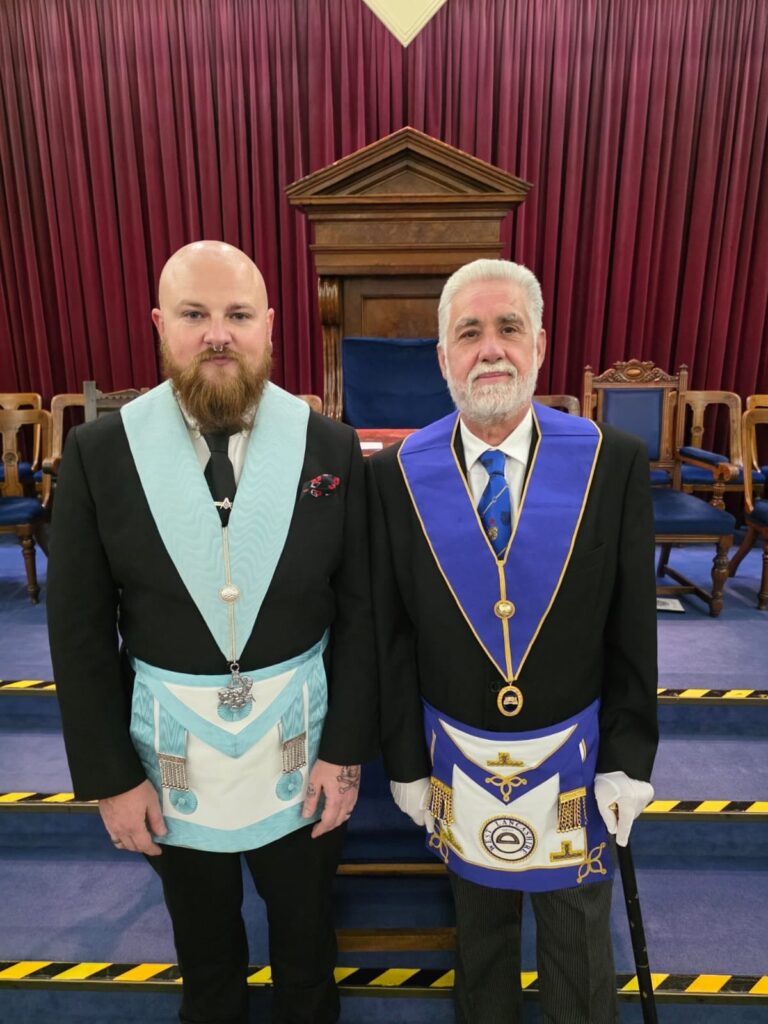
Freemasonry is not a secret government. It is not a cult of devil worshippers. At its heart, looking past the frilly aprons and funny handshakes, it is a 2000-year-old self-help group for men (and women) who want to be better.
It is a journey of self-discovery, using ancient tools to build a modern, virtuous life. Whether you agree with their methods or not, that is the honest truth of what they hold sacred.
Are you a Mason? Do you agree with this assessment? Leave a comment below.
Frequently Asked Questions (SEO FAQ Snippet)
Q: Do Freemasons believe in God?
A: Yes, but they refer to “God” as the “Great Architect of the Universe” (GAOTU). A belief in a Supreme Being is the absolute prerequisite for membership; atheists cannot become Freemasons .
Q: Can a Catholic become a Freemason?
A: Officially, the Roman Catholic Church has prohibited its members from joining Freemasonry since 1738. However, many men still identify as both Catholic and Mason, despite the Vatican’s stance that the two are incompatible.
Q: Do Masons believe in Jesus?
A: This depends on the individual Mason. A Mason is not required to accept Jesus as his savior to join; but he is required to respect the Mason who does. Christian Masons bring their faith in Jesus into the Lodge, while Jewish or Muslim Masons do not.
Q: Why do Masons use symbols?
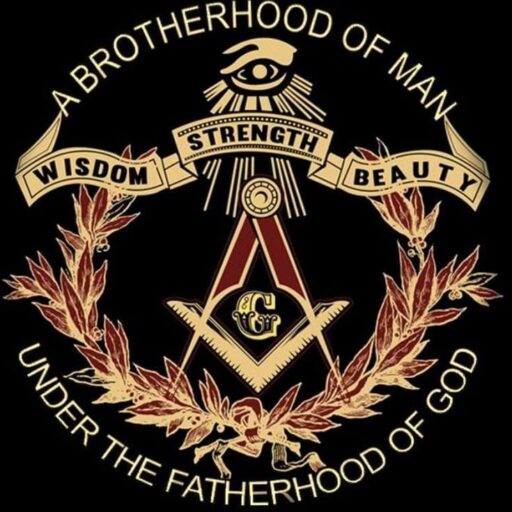
A: Because Freemasonry originated with medieval stonemasons. The Square represents morality, the Compasses represents boundaries of behavior, and the Level represents equality . They use the tools of building to build character.
External References & High-Authority Linkings
For those who wish to verify the claims in this article, please consult the primary sources:
United Grand Lodge of England (UGLE): The governing body for Freemasonry in England and Wales. (Source: ugle.org.uk)
Museum of Freemasonry, London: For the history of symbols and artifacts. (Source: museumfreemasonry.org.uk)
The Order of Women Freemasons: For understanding Co-Masonry and female branches. (Source: owf.org.uk)