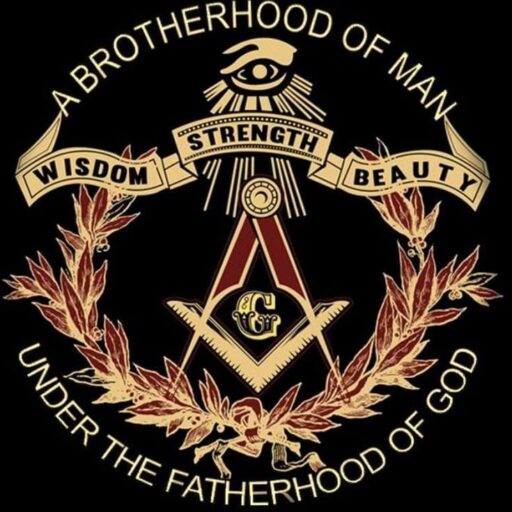
The Ultimate Comparative Analysis: Freemasonry and the Historical Illuminati
By info@newworldorderofficial.com / June 17, 2026 / No Comments / Uncategorized
The modern internet landscape is flooded with ambiguous overlapping references to secret societies, occult symbols, and shadow organizations. At the absolute apex of this cultural curiosity sit two distinct names often spoken in a single breath: the Freemasons and the Illuminati.
While popular fiction and digital clickbait frequently conflate these two entities as a singular, monolithic apparatus guiding global affairs, their actual origins, core structural philosophies, and ultimate historical paths could not be more divergent.
To build clear authority on the subject, we must peel back centuries of romanticized mythology and look directly at the documentation of Enlightenment-era Europe. This deep-dive analysis provides an empirical breakdown of Freemasonry versus the historical Order of the Illuminati, exploring how an obscure academic movement in Bavaria attempted to utilize the pre-existing infrastructure of fraternal lodges to stage a silent philosophical revolution across the Western world.
1. Defining the Entities: Foundations and Timelines
To accurately grasp the tension between these organizations, we must first analyze them as completely separate historical phenomena that emerged out of entirely different centuries, geographic regions, and cultural motives.
+---------------------+-----------------------------------------+------------------------------------------+
| Feature             | The Freemasons                          | The Bavarian Illuminati                  |
+---------------------+-----------------------------------------+------------------------------------------+
| Founded             | Medieval Stone-Mason Guilds             | May 1, 1776                              |
|                     | (Grand Lodge formed 1717)               | (Suppressed by 1785)                     |
+---------------------+-----------------------------------------+------------------------------------------+
| Founder             | Evolution of guilds / Unknown           | Adam Weishaupt                           |
|                     |                                         | (University Professor)                   |
+---------------------+-----------------------------------------+------------------------------------------+
| Primary Objective   | Moral self-improvement, charity,        | Subversion of monarchies, elimination    |
|                     | and civic fraternity.                   | of religious state control.              |
+---------------------+-----------------------------------------+------------------------------------------+
| Core Ideology       | Theistic / Requires belief              | Radical Rationalism and secular          |
|                     | in a Supreme Being.                     | Enlightenment philosophies.              |
+---------------------+-----------------------------------------+------------------------------------------+
The Origins of Freemasonry
Freemasonry did not manifest overnight through a singular decree or a clandestine gathering of elites. Instead, it was an evolutionary socio-cultural transition. Its foundational roots trace back directly to the medieval operative stone-mason guilds of Great Britain and continental Europe. These trade unions guarded structural masonry techniques and geometry secrets, creating complex handshakes and words to identify qualified craftsmen traveling from one construction site to another.
As the building of massive gothic cathedrals declined in the late 17th and early 18th centuries, these local lodges began accepting non-operative, speculative members—gentlemen, thinkers, and nobles interested in the philosophical applications of geometry and Enlightenment ideals.
The formalization of modern speculative Freemasonry occurred in 1717 when four London lodges met at the Goose and Gridiron Ale House to establish the Premier Grand Lodge of England. Freemasonry quickly became an institutionalized civic fraternity focused on philanthropy, moral philosophy, self-improvement, and social networking.
The Emergence of the Bavarian Illuminati
By contrast, the Order of the Illuminati was a highly deliberate, radical intellectual project engineered by a single individual: Adam Weishaupt, a 28-year-old professor of canon law at the University of Ingolstadt in Bavaria. Founded on May 1, 1776, the group initially consisted of only five members.
Weishaupt lived under the oppressive thumb of the Bavarian electoral monarchy and the deep, pervasive censorship of the Roman Catholic Church, which controlled academic thought. Frustrated by the institutional blockades against free speech, scientific advancement, and secular philosophy, Weishaupt set out to create an alternative intellectual vanguard.
Originally named the Bund der Perfektibilisten (The Covenant of Perfectibility), Weishaupt re-christened the order as the Illuminatenorden (The Order of the Illuminati), deriving the name from the Latin illuminatus, signifying those who are intellectually “enlightened”. The explicit goal of Weishaupt’s order was to quietly dismantle the power of state-sponsored religious dogmas and absolute monarchs, establishing a utopian society governed entirely by reason, absolute equality, and universal fraternity.
2. Structural Mechanics and Ideological Divergence
The chasm between Freemasonry and the Illuminati widens significantly when analyzing their structural requirements, political philosophies, and spiritual frameworks.
The Spiritual Prerequisite: Deity vs. Secularism
One of the most profound ideological differences lies in their treatment of religious faith:
- Freemasonic Requirement: To gain entry into a legitimate masonic lodge, an initiate must declare a firm belief in a Supreme Being (often referred to within the lodge as the Great Architect of the Universe). Freemasonry welcomes Christians, Jews, Muslims, and deists alike, but explicitly bars atheists and secular materialists. The Bible, Torah, Quran, or relevant sacred texts rest openly on the lodge altar during all regular proceedings.
- Illuminati Stance: Weishaupt’s organization viewed traditional institutional religion as an obsolete system of control designed to subjugate minds. While the highest degrees of the Illuminati taught a form of enlightened pantheism or a rationalist “religion of reason,” its overarching objective was to eradicate the influence of the Church from public policy and civic life entirely.
Political Neutrality vs. Active Subversion
The two organizations also functioned on completely opposing fields regarding state governments:
“A Mason is a peaceable Subject to the Civil Powers, wherever he resides or works, and is never to be concern’d in Plots and Conspiracies against the Peace and Welfare of the Nation.” — James Anderson, The Constitutions of the Free-Masons (1723)
This landmark rule remains absolute in mainstream Freemasonry today: all political and religious debates are strictly forbidden within a masonic lodge to protect fraternal harmony. Mainstream Freemasonry works alongside established governments, emphasizing civic obedience, charity work, and public community building.
Weishaupt’s Illuminati, on the other hand, functioned as a clandestine political engine. Its fundamental purpose was systemic political subversion. Because advocating for the abolition of monarchies and the separation of church and state was high treason in 18th-century Bavaria, the order operated with intense paranoia, using sophisticated code systems, secret classical aliases (Weishaupt was known as “Spartacus”), and complex multi-layered internal security profiles.
3. The Historical Infiltration: When Worlds Collided
The confusion regarding these two groups is not entirely baseless; there was a historical crossroad where Weishaupt’s order actively invaded the masonic ecosystem.
Recognizing that building an independent secret society from scratch was a slow, grueling process, Weishaupt realized that Freemasonry offered a massive, pre-existing international network of progressive-minded men, secure meeting locations (lodges), and a culture already comfortable with initiation rites and secrecy.
In 1777, Weishaupt joined a Masonic Lodge named “Prudence” in Munich to study their rituals and inner workings firsthand.
[Weishaupt's Illuminati Core]
             │
             ▼ (Recruits)
   [Baron von Knigge (High-Ranking Mason)]
             │
             ▼ (Systemic Infiltration Strategy)
┌──────────────────────────────────────────────┐
│        EUROPEAN FREEMASONIC LODGES           │
│  - Provided Established Infrastructure       │
│  - Shared Intellectual Target Audience      │
│  - Exploited "High Degrees" for Recruitment  │
└──────────────────────────────────────────────┘
The real breakthrough for the Illuminati came when Baron Adolf Franz Friedrich von Knigge, a highly influential and well-connected Freemason, was recruited into the order in 1780. Knigge single-handedly re-engineered the Illuminati’s rudimentary internal structure, designing an advanced 13-degree hierarchy that perfectly mirrored and intercepted the higher masonic degrees.
Knigge and Weishaupt used this clever architecture to execute a systemic infiltration of masonic lodges throughout Germany, Austria, and France. Prominent Masons looking for deeper, more esoteric or progressive enlightenment truths within their own organizations were quietly steered by “insinuants” into Weishaupt’s outer circles, completely unaware that the highest echelons of the group were directing them toward radical political goals. At its peak, this combined operation boasted close to 3,000 elite members, including historic intellectual heavyweights like Johann Wolfgang von Goethe and Johann Gottfried von Herder.
4. The Fall of the Bavarian Order
The rapid expansion of the Illuminati ultimately catalyzed its total destruction. Internal intellectual ego clashes between Adam Weishaupt and Baron von Knigge crippled the leadership council. Knigge grew tired of Weishaupt’s highly authoritarian control and resigned from the group in 1784.
Simultaneously, former members who had grown disillusioned by the group’s extreme anti-religious views began speaking out. The Bavarian state, alerted to a dangerous underground cell operating within its borders, took decisive legal action.
Between 1784 and 1787, Karl Theodor, the Duke-Elector of Bavaria, issued a series of sweeping government edicts that outlawed any secret society, club, or fraternity not expressly approved by sovereign law. The police carried out aggressive raids, seizing the internal correspondence and operational diaries of prominent Illuminati members.
The discovered papers exposed detailed instructions on using invisible ink, forged documents, plans for a women’s branch, and arguments validating state subversion. The Bavarian government published these internal documents to shock the public and completely ruin the reputation of the order.
Weishaupt was stripped of his university chair and fled into exile to Gotha, where he lived out his remaining years writing academic essays. By 1790, the Bavarian Illuminati was structurally dead, completely uprooted, and permanently dissolved. Freemasonry, while suffering temporary regional crackdowns due to the association, managed to weather the storm by consistently reaffirming its absolute loyalty to sovereign states and public law.
5. Comparative Architectural Breakdown
To view the structural divergence clearly, look closely at how their internal progressive levels operate side-by-side:
Freemasonic System (The Blue Lodge)
The foundational structure of all mainstream Freemasonry worldwide is the three-degree symbolic system:
- Entered Apprentice: The initial stage of introduction, representing youth and a focus on basic moral education.
- Fellow Craft: The secondary stage, representing adulthood and a deep study of the liberal arts, sciences, and geometry.
- Master Mason: The final, supreme degree of the lodge, granting full membership privileges, voting rights, and access to advanced masonic paths (such as the Scottish Rite or York Rite).
The Illuminati System (Knigge/Weishaupt 13-Degree Framework)
The Illuminati system was split into three completely separate psychological classes designed to filter out individuals who were too loyal to Church or Crown:
- The Nursery: Novice, Minerval, Illuminatus Minor. Designed to test the candidate’s psychological obedience and willingness to hold secrets.
- The Masonic Class: Apprentice, Fellow, Master, Illuminatus Major, Illuminatus Dirigens. This tier explicitly hijacked traditional masonic vocabulary to run recruitment campaigns inside lodges.
- The Mysteries: Priest, Prince, Magus, King. The inner sanctum where the radical anti-monarchical and secular political agenda was finally revealed to the initiate.
6. From History to Modern Myth
If the Bavarian Illuminati was thoroughly crushed within nine short years of its inception, why does its name continue to dominate modern culture?
The transformation from an extinct 18th-century political organization into an omnipotent shadow empire is due to historical scapegoating and pop culture evolution. In the immediate aftermath of the French Revolution of 1789, conservative authors like Abbé Augustin Barruel and John Robison published widely read treatises claiming that the Illuminati had survived its Bavarian exile and engineered the total overthrow of the French monarchy. This concept of an invisible, highly structured group orchestrating major global shifts provided a comforting, simplistic explanation for chaotic historical events.
In the 20th century, this lingering myth was satirized and popularized by counterculture writers through books like The Illuminatus! Trilogy, which intentionally blended historical facts with absurd conspiracy fiction to mock post-war paranoia.
With the dawn of the internet, these fictional tropes were stripped of their satirical context and weaponized by modern algorithms, giving rise to the modern concept of the “New World Order.” For an extensive look into how these theories transitioned into modern pop culture landscapes, you can read the research archived at the New World Order Official Platform.
7. Direct Structural Comparison
To summarize the differences, look at this definitive breakdown:
- Longevity: Freemasonry has existed continuously for over 300 years; the historical Illuminati existed for less than a decade (1776–1785).
- Transparency: Freemasonry holds open public events, operates marked masonic temples, and publishes their local leadership directories; the Illuminati required total operational anonymity and hidden identities.
- Political Engagement: Freemasonry strictly forbids its members from engaging in political or partisan arguments within the lodge environment; the Illuminati was established primarily to alter the institutional political landscape.
- Religious Stance: Freemasonry requires a foundational belief in a Supreme Being and respects religion; the Illuminati explicitly sought the total secularization of civil society.
Ultimately, conflating the Freemasons with the Illuminati is a significant historical mistake. Freemasonry is an open, long-standing fraternal society focused on community and moral values. The Illuminati was a short-lived, intense academic rebellion designed to force the ideals of the Enlightenment through hidden political maneuvers. Understanding this core distinction is the critical first step to unpacking the deep, complex history of Western secret societies.
For verifiable academic overviews of these specific timelines, you can cross-reference the comprehensive entries available via Britannica’s Secret Societies Research.