What Does the Illuminati Do? The Real Operations of History’s Most Mysterious Secret Society
By info@newworldorderofficial.com / April 24, 2026 / No Comments / Uncategorized
What Does the Illuminati Do? The Real Operations of History's Most Mysterious Secret Society
Part 1: The Core Mission — What the Illuminati Was Trying to Achieve
Before understanding what the Illuminati did, you must understand what they wanted.
Founded on May 1, 1776, by Adam Weishaupt, a 28-year-old professor of canon law at the University of Ingolstadt in Bavaria, the Illuminati was born out of frustration . Weishaupt was educated by Jesuits but grew increasingly angry at the control that religious authorities exerted over intellectual life and politics . He was a son of the Enlightenment—an era that championed reason, science, and individual liberty over tradition, faith, and absolute monarchy.
The society’s stated goals, written in their general statutes, were to oppose “superstition, obscurantism, religious influence over public life, and abuses of state power” . The order of the day, they wrote, was “to put an end to the machinations of the purveyors of injustice, to control them without dominating them” .
But there was a more ambitious goal beneath these noble statements. Weishaupt aimed to overthrow existing monarchical governments and replace established religion with a “religion of reason” . He wanted to create a “universal republic” ruled by a secretive committee charged with promoting morality and virtue . He wanted to reshape the very fabric of human civilization .
This was not a small ambition. For a single professor in a small German university town, it was audacious bordering on delusional.
What was the goal of the Illuminati — To oppose superstition, religious control, and abuses of state power; to replace Christianity with a “religion of reason.”
Part 2: How the Illuminati Operated — The Organizational Structure
The Illuminati did not operate as a loose collection of friends sharing ideas. Weishaupt borrowed from the most disciplined organizations he knew.
The Jesuit Model
Weishaupt had been educated by Jesuits, and he admired their internal hierarchy, discipline, and system of mutual surveillance . The Illuminati was organized “largely along Jesuit lines,” with members pledging obedience to their superiors . The Jesuits of Ingolstadt still held power at the university even after their order was dissolved, and they made constant attempts to frustrate non-clerical staff . Weishaupt resolved to fight fire with fire—using the organizational tools of his enemies.
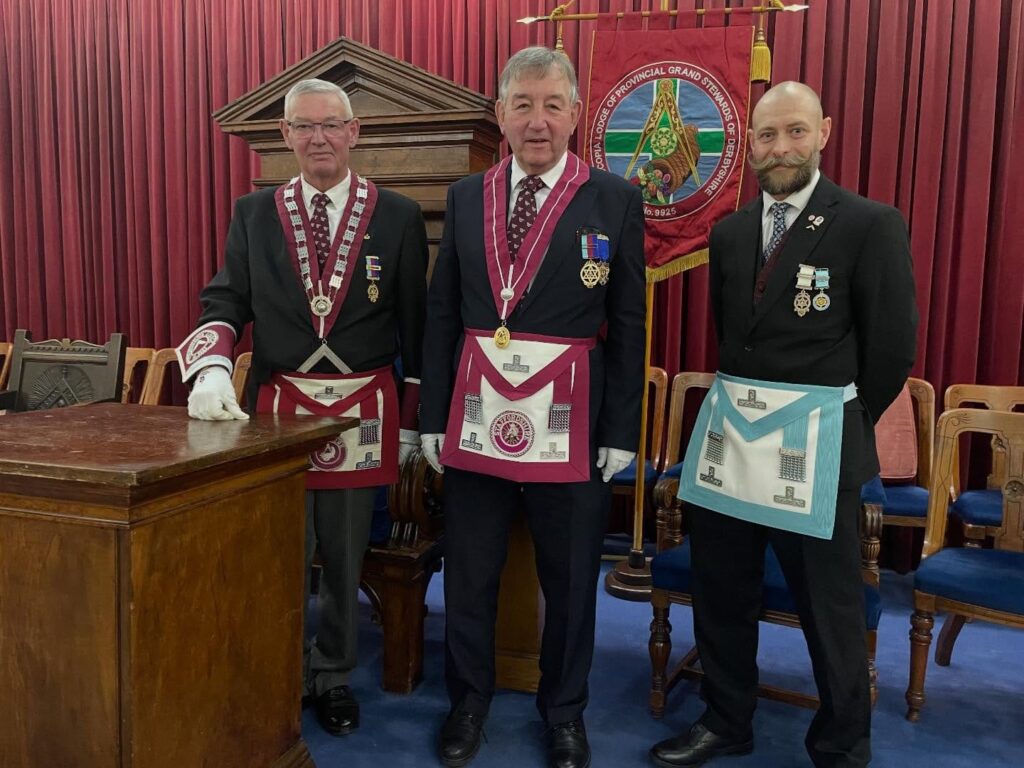
The Masonic Connection
Weishaupt found Freemasonry expensive and not fully open to his radical ideas, so he initially created his own separate organization . He first called his group the Bund der Perfektibilisten (Covenant of Perfectibility), or Perfectibilists, because he believed humans could be perfected through education and reason . On 1 May 1776, Weishaupt and four students formed the Perfectibilists, taking the Owl of Minerva—the goddess of wisdom—as their symbol .
Why did he change the name to “Illuminati”? He later admitted he changed it because “Perfectibilists” sounded too strange . In April 1778, after contemplating calling themselves the “Bee order,” they settled on the Illuminatenorden, or Order of Illuminati .
The Three Classes of Membership
Weishaupt designed an elaborate hierarchy. Members were divided into three main classes :
First Class: The Nursery
Novices
Minervals
Lesser Illuminati
Second Class: Freemasonry
Ordinary Freemasons
Scottish Freemasons
Scottish Knights
Third Class: The Mysteries
Priest
Regent
Magus
King
Each member was given a classical code name for use in all official correspondence. Weishaupt called himself Spartacus (after the Roman slave-rebel who led a massive uprising) . His second-in-command, Adolf Franz Friedrich von Knigge, was Philo . Towns and provinces were given arbitrary fictional names. All internal correspondence was conducted in cipher .
This was not theatrical excess. The secrecy was functional during a time when criticizing the Church or the monarchy could cost a man his career—or his life.
: Illuminati organizational structure — Three classes modeled on Jesuit hierarchy: Nursery, Freemasonry, and Mysteries; led by “Spartacus” (Weishaupt).
Part 3: The Real Activities — What Illuminati Members Actually Did
So, with this structure in place, what did members do at their meetings? The answer is less dramatic than you might hope—and more interesting.
They Recruit
The first activity of any secret society is recruitment, and the Illuminati pursued it aggressively. Weishaupt began with a narrow circle of disciples carefully selected from among his own students. He gradually extended recruitment from Ingolstadt to Eichstätt, Freising, Munich, and elsewhere, with “special attention given to the enlistment of young men of wealth, rank, and social importance” .
Why wealthy young men? Because they had the resources and social connections to actually influence society. Weishaupt was not building a reading club—he was building an army of influence.
They Infiltrate Freemasonry
In 1777, Weishaupt joined a Masonic lodge in Munich . He needed access to the older organization’s network. Through the Masonic lodges, he found a pool of candidates already amenable to secret society structures and Enlightenment ideas .
By 1778, the Illuminati had begun making contact with various Masonic lodges across Germany. Under Knigge’s leadership, they often managed to gain a commanding position within these lodges . One Masonic lodge was renamed Theodore of the Good Council to flatter the Bavarian Elector. It was founded in Munich on 21 March 1779 and quickly packed with Illuminati members .
This is the origin of the “infiltration” narrative that conspiracy theorists love. The Illuminati did infiltrate Freemasonry—not to destroy it from within, but to use its network to spread their ideas across Europe.
They Hold Secret Meetings
Members would meet in secret to swap ideas about how to change the world in ways consistent with Enlightenment values . They discussed politics, philosophy, and strategy. They read banned books. They planned how to spread rationalist ideas into German society.
The BBC’s Michael Taylor, a historian working on a full-length history of the Illuminati, describes it this way: “Weishaupt is very clear. There is some kind of messianic complex within him, and he really does want to cause a revolution in the way that the world operates” .
They Recruit Intellectual Celebrities
At its high point in the early 1780s, the Illuminati attracted some genuinely famous members. It is “absolutely true” that Johann Wolfgang von Goethe—Germany’s greatest literary figure—was a member . There is “strong but perhaps circumstantial evidence” that both Friedrich Schiller and Wolfgang Amadeus Mozart were members as well .
What did these literary giants actually do for the Illuminati? They did not plot assassinations. They saw in the Illuminati “the kinds of enlightened, rational ideas that were so appealing to them and to men of their ilk” . They contributed their intellectual prestige and their networks.
Other claimed members included astronomer Johann Bode, writer Friedrich Nicolai, philosopher Friedrich Jacobi, and poet Friedrich Leopold .
What did the Illuminati do in meetings — Recruited wealthy intellectuals, infiltrated Freemason lodges, held secret discussions about overthrowing monarchy and religion.
Part 4: The Illuminati’s Downfall — What They Did Wrong
At its peak, the Illuminati had perhaps 2,000 members . But by 1785, they were finished. What happened?
They Got Too Confident
The Illuminati’s downfall was not caused by a heroic conspiracy-buster or a secret enemy. It was caused by arrogance.
In Munich—the most important center of Illuminati activity—members began “talking a little bit too openly about what they were doing and what their plans are” . The Bavarian government, intensely conservative and intensely Catholic, began to worry.
The Raid and the Edicts
Between 1784 and 1787, the Bavarian government issued a series of edicts banning all secret societies . The police raided the home of a senior Illuminatus and seized documents . They found documents kept on hand—not in cipher, not hidden—exposing the entire operation .
Weishaupt was stripped of his professorship and banished from Bavaria . Some members were imprisoned; others were driven from their homes .
The Death of the Order
After 1785, “the historical record contains no further activities of Weishaupt’s Illuminati” . Members left in droves. By 1786, the first iteration of the Illuminati was finished . By 1790, the order had effectively ceased to exist.
The Illuminati was real. It was operational. And it failed.
Why did the Illuminati fail — Bavarian government banned them in 1785 after raiding a member’s home and seizing incriminating documents.
Part 5: The Afterlife — What the Illuminati Did After 1790 (Nothing)
Here is the critical truth that conspiracy theorists ignore: After 1790, the Illuminati stopped existing.
There is no continuous chain of Illuminati leaders from the 18th century to the present. There is no shadowy council meeting in secret to control global events. The order was banned, its leader exiled, and its membership scattered.
However, this did not stop people from believing the Illuminati continued.
The Birth of the Conspiracy (1797)
In 1797—a full seven years after the Illuminati had disbanded—a French priest named Abbé Augustin Barruel published a book blaming the Illuminati for the French Revolution . At the same time, a Scottish physicist named John Robison published a similar book for different reasons .
Neither man had evidence. Both were motivated by the desire to explain a terrifying historical event through a tidy conspiracy narrative. It was, as the BBC notes, “perhaps the world’s first conspiracy theory” .
The Modern Myth (1975 to Present)
The Illuminati of popular culture—the cabal of celebrities, the New World Order, the all-seeing eye on the dollar bill—was largely invented by a 1975 satirical novel called The Illuminatus! Trilogy . The book was fiction written by members of a neo-pagan chaos-worshipping group called the Discordians.
Many readers did not realize it was fiction. They took absurd, intentionally satirical claims as fact. And the modern Illuminati myth was born.
Are the Illuminati still active today — No. The historical Illuminati ended in 1790. The modern “Illuminati” is a myth derived from fiction.
Conclusion: What the Illuminati Really Did
After reviewing the historical record—the founding in 1776, the 2,000 members, the infiltration of Masonic lodges, the raid, the ban, the death—we can answer our original question.
What did the Illuminati do?
They recruited young, wealthy, influential intellectuals to their cause.
They infiltrated existing Masonic lodges to spread their ideas across Germany and Europe.
They held secret meetings to plan the overthrow of monarchy and the replacement of Christianity with a “religion of reason.”
They failed. Spectacularly. Completely. Permanently.
The Illuminati did not control governments. They did not start wars. They did not recruit pop stars. They were a small group of Enlightenment dreamers who believed that reason could remake the world, and who discovered—like many dreamers before and after—that the world does not change easily.
What the Illuminati actually did was inspire a 300-year conspiracy theory that has outlasted their actual organization by centuries. Whether Weishaupt would find this ironic or satisfying is impossible to say.
Frequently Asked Questions
Q: What did the Illuminati actually do?
A: The real, historical Illuminati (1776-1790) recruited intellectuals, infiltrated Masonic lodges, held secret meetings, and planned to overthrow monarchy and replace Christianity with a “religion of reason.” They had about 2,000 members at their peak and were banned by the Bavarian government in 1785 .
Q: Is the Illuminati still active?
A: No. After 1790, the historical record contains no further activities of Weishaupt’s Illuminati. The modern “Illuminati” is a conspiracy theory, not a real organization .
Q: Who founded the Illuminati?
A: Adam Weishaupt, a 28-year-old professor of canon law at the University of Ingolstadt in Bavaria, founded the Illuminati on May 1, 1776 .
Q: Did the Illuminati start the French Revolution?
A: No. This claim was made in 1797 by a French priest named Abbé Barruel, writing seven years after the Illuminati had already disbanded. There is no evidence supporting this claim .
Q: How many members did the Illuminati have?
A: At its peak in the early 1780s, the Illuminati had fewer than 2,000 members—not millions, not thousands .
Q: Were famous people like Mozart and Goethe in the Illuminati?
A: Possibly. Historians have strong evidence that Goethe was a member and circumstantial evidence for Mozart and Schiller. However, their membership meant they supported Enlightenment ideas, not that they were plotting world domination .
Encyclopaedia Britannica – Bavarian Illuminati: Comprehensive historical entry on the founding, doctrine, rise, and fall of Weishaupt’s society. (Source: britannica.com)
BBC Sounds – Unveiling the Illuminati: BBC documentary featuring historian Michael Taylor, detailing what the real Illuminati did and how the myth began. (Source: bbc.co.uk)
Wikipedia – Illuminati: Detailed historical overview with citations to primary and secondary sources. (Source: wikipedia.org)
Grand Lodge of British Columbia and Yukon – Masonic References in Angels and Demons: Authoritative Masonic source debunking the fictional connections between the Illuminati, Freemasonry, and modern conspiracy theories. (Source: freemasonry.bcy.ca)