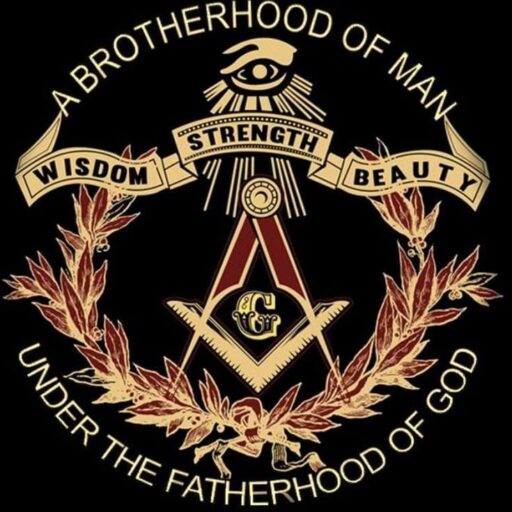
Freemason Symbols Decoded: The Secret Meaning Behind Square, Compasses, and the All-Seeing Eye
Have you ever seen a mysterious symbol consisting of a square, a set of compasses, and a letter “G” and wondered what it means? Or perhaps you have spotted an eye floating inside a triangle on the back of a one-dollar bill and heard whispers about its connection to the Freemasons?
You are not alone. Millions of people search for terms like “Freemason symbol meaning,” “Masonic square and compasses,” and “All-Seeing Eye Freemasonry” every single month. These symbols appear on buildings, bumper stickers, lapel pins, and even national currencies. Yet their true meanings remain shrouded in mystery for most of the public.
As an SEO expert with a passion for symbology and fraternal history, I have analyzed Masonic literature, museum collections, and academic sources to bring you the definitive guide to Masonic symbols. In this comprehensive 2,000+ word guide, we will decode the most important symbols of Freemasonry—from the universally recognized square and compasses to the enigmatic Eye of Providence—and reveal the moral lessons they were designed to teach.
Part 1: The Most Recognizable Masonic Symbol – The Square and Compasses
If you know only one symbol associated with Freemasonry, it is almost certainly the Square and Compasses . This emblem appears on Masonic temples worldwide, on regalia, in jewelry, and on countless other objects. But what does it actually represent?
The Square – Symbol of Morality and Fairness
The square is a builder’s tool consisting of two equal flat-edged arms fixed together to form a perfect 90-degree right angle . In medieval stonemasonry, this tool was essential for ensuring that stones were cut with perfect square corners. A cube that is not perfectly square will not fit properly with others when delivered to the building site, potentially compromising the structural integrity of an entire cathedral or castle .
When Freemasonry transitioned from “operative” (actual stone-working) to “speculative” (philosophical) in the early 1700s, the square was adopted as a symbol of moral rectitude. For a Freemason, the square represents the obligation to treat people equally and fairly . The phrase “on the square” entered the English language meaning to treat people in an upright and proper fashion .
As one Masonic source explains, the square teaches that being “square” in your actions implies being honest and fair . It is the tool that reminds a Mason to ensure that his dealings with others are just and equitable.
The Compasses – Symbol of Self-Restraint and Boundaries
The compasses consist of two legs equal in length, fixed together at their apex by an adjustable hinge . In geometry class, you used them to draw perfect circles and arcs. In Freemasonry, they carry a profound moral meaning.
For the stonemason, the compasses were used to draw circles and arcs on stones . For the Freemason, they represent the boundary of our day-to-day lives . A Mason uses the compasses to remember never to go beyond the boundary—never to stray into bad or excessive behavior.
The compasses symbolize self-restraint and a man’s ability to reign in his yearnings so that he may live a balanced life . In the teachings of Freemasonry, the compasses are symbolically employed to draw a boundary line around our desires to avoid overindulence and maintain moderation—the foundation of morality and wisdom .
Taken Together – A Life of Integrity
Alone, the square teaches fairness toward others, and the compasses teach self-discipline. Together, they form a complete moral system. As one authoritative Masonic encyclopedia states, the square illustrates our duties to our neighbor and brother, while the compasses give the additional light that instructs us in the duty we owe to ourselves—the great, imperative duty of circumscribing our passions and keeping our desires within due bounds .
Together, the square and compasses sum up Freemasonry’s aim of helping members to live a moderate and upright life, so they may be of benefit to their communities .
Square and Compasses Freemasonry meaning – The square represents morality and fairness toward others; the compasses represent self-restraint and moderation.
Part 2: The Letter “G” – Geometry or God?
If you are looking at an American Masonic symbol, you will almost certainly see a prominent letter “G” positioned in the center of the square and compasses . This element is less common in England and other parts of the world, but in the United States, it is ubiquitous.
The Two Meanings of “G”
The letter “G” carries two equally important meanings in Freemasonry, and both are essential to understanding the fraternity.
Meaning #1: Geometry
The first meaning of “G” is Geometry . This connection reflects Freemasonry’s roots in stonemasonry and architecture. Stonemasons used geometry to translate drawings or ideas into buildings and other structures. Geometry is also an important tool for exploring the world and universe around us .
In an era when mathematics was considered a sacred science, geometry was seen as the key to understanding the order and perfection of the universe . For Freemasons, studying geometry is a form of understanding the Grand Architect’s design.
Meaning #2: God (The Great Architect of the Universe)
The second meaning of “G” is God, or more specifically, the Great Architect of the Universe (GAOTU) . Freemasonry requires that members believe in a deity, but it does not specify which one. The use of “G” instead of spelling out “God” helps avoid bias toward any specific religion .
For a Christian Mason, the “G” refers to the Trinity. For a Jewish Mason, it refers to Yahweh. For a Muslim Mason, it refers to Allah. The single letter allows Masons of different faiths to pray together, each according to his own beliefs, without sectarian conflict .
A Symbol of Connection
For Freemasons, the letter “G” therefore connects both the spiritual and physical worlds . It reminds the Mason that geometry (the physical understanding of the universe) and God (the spiritual source of that universe) are insepara Letter G in Freemasonry symbol – Stands for both Geometry (the science of architecture) and God (the Great Architect of the Universe).
Part 3: The All-Seeing Eye – The Eye of Providence
If you have ever examined the back of a United States one-dollar bill, you have seen a mysterious symbol: an eye floating inside a triangle, surrounded by rays of light, hovering above an unfinished pyramid . This is the Eye of Providence, also known as the All-Seeing Eye.
The Masonic Meaning
In Freemasonry, the All-Seeing Eye first appeared as part of standard Masonic iconography in 1797 with the publication of Thomas Smith Webb’s The Freemason’s Monitor . In Masonic usage, the Eye represents the all-seeing eye of God and serves as a reminder that humanity’s thoughts and deeds are always observed by God—who is referred to in Masonry as the Great Architect of the Universe .
Typically, the Masonic Eye of Providence has a semicircular glory (a halo of rays or light) below it and is sometimes enclosed by a triangle . The triangle itself is significant, as the number three holds great importance in Masonic symbolism.
The Great Seal of the United States – A Common Misconception
Popular among conspiracy theorists is the claim that the Eye of Providence shown atop an unfinished pyramid on the Great Seal of the United States indicates the influence of Freemasonry in the founding of the United States .
However, this claim does not hold up to historical scrutiny. Common Masonic use of the Eye dates to 14 years after the creation of the Great Seal . Furthermore, the only Mason among the members of the various design committees for the Great Seal was Benjamin Franklin, and his ideas for the seal were not adopted. Various Masonic organizations have explicitly denied any connection to the creation of the Seal .
The Eye Was Not Created by Freemasons
It is also important to note that the All-Seeing Eye of God was not a symbol created by the Masonic fraternity. In fact, it was utilized as an emblem in Christian architecture long before speculative Freemasonry became an organization . The symbol appears in Renaissance art, Catholic church decoration, and other religious contexts dating back centuries before the formation of the first Grand Lodge in 1717.
All-Seeing Eye Freemasonry meaning – Symbol of God watching over humanity; appears on US one-dollar bill but pre-dates Masonic use.
Part 4: The Volume of the Sacred Law – The Open Book
In every Masonic lodge, you will find a Volume of the Sacred Law (VSL) placed on the altar in the center of the room. For most English-speaking lodges, this is the Bible. But it is not always a Bible.
What Book Is on the Altar?
The VSL is the book that represents the revealed will of the Grand Architect of the Universe according to the members of that particular lodge. In a lodge with Jewish members, the VSL might include the Torah. In a lodge with Muslim members, it might include the Koran .
The Symbolic Meaning
The presence of a holy book on the altar serves multiple symbolic purposes. First, it signifies that Freemasonry is not a replacement for religion but a supplement to it. Second, it reminds Masons that their actions should be regulated according to divine will, as they understand it .
The book is typically left open to signify that the light of divine revelation is available to all who seek it.
Volume of the Sacred Law Masonic meaning – The holy book (Bible, Torah, Koran, etc.) on the Masonic altar, representing divine revelation.
Part 5: The Two Pillars – Boaz and Jachin
In Masonic lodges and on tracing boards, you will often see two large pillars flanking the entrance to the lodge. These represent the two pillars that stood at the porch of King Solomon’s Temple, as described in the biblical Book of Kings.
Their Names
The pillars are named Boaz and Jachin . According to Masonic tradition, these names mean “In strength” and “He will establish.”
Their Symbolism
The two pillars represent stability, strength, and the entrance into a sacred space. For the Mason, passing between the pillars symbolizes entering into a new understanding of moral and spiritual truth.
In some Masonic rites, different attributes are assigned to each pillar. One may represent wisdom, the other strength. Together, they support the “porch” of the temple—the gateway to Masonic enlightenment .
Masonic pillars Boaz Jachin meaning – The two pillars from King Solomon’s Temple, representing strength and divine establishment.
Part 6: The Sprig of Acacia – Symbol of Immortality
One of the most profound symbols in Freemasonry is the Sprig of Acacia. It is intimately connected with the third degree—the degree of Master Mason—and carries deep spiritual meaning.
What Is Acacia?
The acacia is the mimosa nilotica (also known as the shittah tree), which grows abundantly in Palestine . In the Bible, acacia wood was used to build the Tabernacle and the Ark of the Covenant.
The Symbolic Meaning
The sprig of acacia is preeminently the symbol of the immortality of the soul . This symbolism is derived from its nature as an evergreen—it never fades or dies, even in harsh conditions. For this reason, it was planted by the Jews at the head of a grave as a symbol of hope for eternal life.
In Masonic ritual, the sprig of acacia plays a central role in the Hiramic legend of the third degree, which teaches the lesson that death is not the end, and that fidelity to one’s obligations will be rewarded in the afterlife.
The word “acacia” also carries a double meaning in Greek, where it signifies both the plant and “innocence” . The acacia is thus also a symbol of the innocence and purity that the Mason strives to maintain throughout his life.
Sprig of Acacia Masonic meaning – An evergreen symbol representing the immortality of the soul and innocence.
Part 7: The Beehive – Symbol of Industry
While less commonly discussed than the square and compasses, the beehive is an important Masonic symbol .
In Freemasonry, the beehive represents industry and the virtue of hard work. Just as bees work together harmoniously to build their hive and produce honey, Masons are encouraged to work together cooperatively to build a better society.
The beehive also teaches that idle hands lead to vice, while productive labor leads to virtue and prosperity.
Masonic beehive symbol meaning – Represents industry, cooperation, and the virtue of productive labor.
Part 8: The Rough and Perfect Ashlars – The Journey of Self-Improvement
One of the most beautiful symbols in Freemasonry is the contrast between the rough ashlar and the perfect ashlar .
The Rough Ashlar
The rough ashlar is a stone in its natural state—rough, uneven, and unshaped. It represents the newly initiated Mason, who comes to the fraternity with potential but lacking in moral and intellectual refinement.
The Perfect Ashlar
The perfect ashlar is a stone that has been smoothed, squared, and polished by the craftsman’s tools. It represents the Mason who has worked diligently to improve himself—to “square” his actions, to “level” his emotions, and to “polish” his character through the lessons of Freemasonry.
The Lesson
Every Mason is a rough ashlar when he begins his journey. Through the application of the working tools (the square, the level, the plumb, etc.), he gradually transforms himself into a perfect ashlar—a “living stone” fit for the spiritual temple that Freemasonry seeks to build .
Rough and perfect ashlar Masonic meaning – Symbols of the Mason’s journey from unrefined potential to polished virtue.
Part 9: Symbols Often Mistaken for Masonic – Debunking the Myths
Given the secretive nature of Freemasonry (or more accurately, its private nature), many symbols have been incorrectly attributed to the fraternity. Let’s clear up a few common misconceptions.
The Goat
There is a persistent rumor that Freemasons use a goat in their initiation ceremonies. This is false. A goat is not a Masonic emblem or symbol, nor is “G.O.A.T.” a Masonic term .
However, there is a grain of truth behind the rumor. When more than one candidate takes a degree, some lodges will choose one to act as an “exemplar” (taking an active part in the rituals while the other candidates watch). This exemplar is often jokingly referred to as “the goat”—as in “scapegoat” . Similarly, there is a somewhat obsolete expression that a candidate will “ride the goat” when he takes his third degree. This is mild, good-natured hazing—making the candidate think he will be asked to do something embarrassing—with no actual goat involved.
Baphomet
False. Baphomet is an occult symbol associated with esoteric and Satanic traditions. It has no place in regular Freemasonry.
The Pentagram
While the five-pointed star is used by the Order of the Eastern Star (a Masonic-related organization for women), it is not generally used in Craft (Blue Lodge) Freemasonry .
Masonic goat myth debunked – No, Freemasons do not use goats in their rituals. The rumor stems from the term “scapegoat” for ceremony exemplars.
Part 10: Why So Many Symbols? The Masonic Philosophy of Symbolism
After reading about all these symbols, you might be wondering: Why does Freemasonry use so many symbols?
The answer lies in the very definition of Freemasonry. The fraternity is often described as “a system of morality, veiled in allegory and illustrated by symbols” .
This is not accidental. In the preface to his classic work The Symbolism of Freemasonry, Dr. Albert G. Mackey (one of the most important Masonic scholars of the 19th century) explains that symbols are one of the two primary modes of Masonic instruction, the other being legends .
He writes: “No science is more ancient than that of symbolism. At one time, nearly all the learning of the world was conveyed in symbols. And although modern philosophy now deals only in abstract propositions, Freemasonry still cleaves to the ancient method, and has preserved it in its primitive importance as a means of communicating knowledge” .
Why Symbols Work
A symbol is far more powerful than a simple verbal instruction. When a Mason learns that the “plumb is a symbol of rectitude of conduct,” he does not simply memorize a fact. He makes a mental connection between the physical tool (the plumb, used to ensure walls are vertical) and the moral concept (uprightness in life) .
Every time he sees a plumb line thereafter, he is reminded of his obligation to live an upright life. The symbol becomes a mnemonic aid—a memory tool that reinforces moral lessons without constant verbal repetition.
This is the genius of Masonic symbolism. The symbols are not secrets to be hoarded; they are tools to be used in the lifelong work of self-improvement.
Why Freemasonry uses symbols – Symbols are mnemonic aids that teach moral lessons through the tools of medieval stonemasons.
Conclusion: The Square and Compasses – A Universal Emblem of Virtue
The symbols of Freemasonry are not arbitrary. They are not occult sigils or secret codes. They are a carefully constructed system of moral instruction, drawn from the workshop of the medieval stonemason and adapted to the spiritual needs of modern men and women.
-
The Square reminds the Mason to treat others with fairness and honesty.
-
The Compasses remind him to set boundaries on his desires and live a balanced life.
-
The Letter “G” reminds him that geometry (the understanding of the physical universe) and God (the source of that universe) are inseparable.
-
The All-Seeing Eye reminds him that his thoughts and deeds are always observed by the Great Architect.
-
The Sprig of Acacia gives him hope for immortality.
-
The Rough and Perfect Ashlars chart his journey from unrefined beginner to polished Master.
These symbols have endured for centuries because they speak to universal human concerns: How do I live a good life? How do I treat others fairly? How do I control my own impulses? What happens after I die?
The next time you see the square and compasses emblazoned on a building or a lapel pin, you will know that it is not a sign of conspiracy or secret power. It is an invitation to live a life of integrity, moderation, and service—principles that are just as relevant today as they were when the first speculative Masons gathered at the Goose and Gridiron tavern in 1717.
Have you noticed Masonic symbols in your local community? Do you have questions about other Masonic emblems? Leave a comment below.
Frequently Asked Questions
Q: What is the main symbol of Freemasonry?
A: The main symbol of Freemasonry is the Square and Compasses, often with the letter “G” in the center (particularly in American lodges). The square represents morality and fairness toward others; the compasses represent self-restraint and moderation .
Q: What does the “G” stand for in the Masonic symbol?
A: The “G” stands for both Geometry (the science of architecture and the order of the universe) and God (the Great Architect of the Universe). It connects the physical and spiritual worlds .
Q: Is the All-Seeing Eye a Masonic symbol?
A: Yes, the All-Seeing Eye (Eye of Providence) is used in Freemasonry as a symbol of God watching over humanity. However, it was not created by Freemasons—it appears in Christian architecture and Renaissance art centuries before the formation of speculative Freemasonry .
Q: Why does the US one-dollar bill have a Masonic symbol?
A: The one-dollar bill features the Eye of Providence above an unfinished pyramid on the Great Seal of the United States. While often associated with Freemasonry, common Masonic use of the Eye dates to 14 years after the Great Seal was created, and no direct Masonic influence has been proven .
Q: Do Freemasons use goats in their rituals?
A: No. This is a persistent myth. A goat is not a Masonic emblem or symbol. The rumor likely comes from the term “goat” being used jokingly to refer to a candidate who serves as an “exemplar” or “scapegoat” during degree ceremonies .
Q: What is the most important symbol in Freemasonry?
A: While the square and compasses are the most recognizable, many Masons would argue that the Volume of the Sacred Law (the holy book on the altar) is the most important, as it represents divine revelation and the moral law that governs all Masonic teaching .
Q: What does the acacia symbol mean in Freemasonry?
A: The sprig of acacia is the symbol of the immortality of the soul. Because acacia is an evergreen that never fades, it represents eternal life and the hope of resurrection. It is central to the third (Master Mason) degree .
External References & High-Authority Linkings
For those who wish to verify the claims in this article or dive deeper into Masonic symbolism, please consult these authoritative sources:
-
Museum of Freemasonry, London: Official blog explaining the square and compasses symbol, with historical context from the world’s oldest Masonic museum. (Source: museumfreemasonry.org.uk)
-
Freemason.com (The Masonic Society): Detailed breakdown of the square and compasses, including the letter “G” and the distinction between “compasses” and “compass.” (Source: freemason.com)
-
Wikipedia – Eye of Providence: Comprehensive article on the All-Seeing Eye, including its Masonic use and the historical facts regarding the Great Seal of the United States. (Source: wikipedia.org)
-
Wikisource – The Symbolism of Freemasonry: Albert G. Mackey’s classic 1869 work, providing in-depth analysis of Masonic symbols including the acacia, pillars, and all-seeing eye. (Source: wikisource.org)
-
FAIR Latter-day Saints: Historical analysis of the All-Seeing Eye, confirming it was used in Christian architecture long before Freemasonry adopted it. (Source: fairlatterdaysaints.org)
