Are There Freemasons in the Netherlands? Full Guide to Dutch Masonry (Orde der Vrijmetselaren)
By info@newworldorderofficial.com / April 17, 2026 / No Comments / Uncategorized
Are There Freemasons in the Netherlands? Full Guide to Dutch Masonry (Orde der Vrijmetselaren)
re There Freemasons in the Netherlands? Yes – And They Have a Surprising History
If you live in Amsterdam, Rotterdam, Utrecht, or The Hague, you have probably walked past a nondescript building with a square and compass symbol on the facade. You may have wondered: Are there Freemasons in the Netherlands? Or is that just an American or British thing?
The answer is definitive: Yes. The Netherlands has an active, respected, and historically significant Masonic tradition dating back to 1734.
Today, the Dutch Masonic order – officially called the Orde van Vrijmetselaren onder het Grootoosten der Nederlanden (Order of Freemasons under the Grand Orient of the Netherlands) – has approximately 6,000 members spread across 160+ lodges in nearly every Dutch province.
This guide will tell you everything: the history, the famous Dutch Masons, how Dutch Freemasonry differs from Anglo-American Masonry, and how a Dutch citizen can join.
H2: The Short Answer – Freemasonry in the Netherlands Today
Before diving into history, here are the key facts about Dutch Freemasonry in 2026:
| Fact | Detail |
|---|---|
| Official name | Orde van Vrijmetselaren onder het Grootoosten der Nederlanden |
| Founded | 1734 (first lodge), 1756 (Grand Orient established) |
| Number of members | Approximately 6,000 |
| Number of lodges | 160+ |
| Headquarters | Prinsessegracht 27, The Hague |
| Recognition | Recognized by the United Grand Lodge of England (UGLE) and nearly all mainstream Masonic bodies worldwide |
| Famous Dutch Masons | Prince Frederik of the Netherlands, Willem Arondeus (WWII resistance hero), Joop van den Broek (architect) |
| Women’s Masonry | Separate order: Grootoosten der Vrouwen (Grand Orient of Women) – approx. 500 members |
H2: A Brief History of Freemasons in the Netherlands
H3: 1734 – The First Dutch Lodge
The first Masonic lodge on Dutch soil was established in Amsterdam in 1734 under the name Lodge L’Union Royale (The Royal Union). It was founded by Dutch merchants and aristocrats who had been initiated in England and France. Within a decade, lodges appeared in The Hague, Rotterdam, and Utrecht.
H3: 1756 – The Grand Orient of the Netherlands
In 1756, several lodges united to form the Grootoosten der Nederlanden (Grand Orient of the Netherlands), which remains the governing body for male Masonry in the country. Unlike England, which requires belief in a Supreme Being without specifying further, the Dutch Grand Orient took a more liberal path – which later caused controversy.
H3: The “Liberal” Schism (1870s)
Most of the world’s Freemasonry (UGLE, most US Grand Lodges) requires a belief in a Supreme Being but does not require the Volume of Sacred Law to be open at every meeting. The Dutch Grand Orient went further: in the 1870s, it removed the requirement that the Bible (or any holy book) be open on the altar during lodge meetings. This made Dutch Masonry what is called “liberal” or “Continental” Freemasonry.
As a result, the United Grand Lodge of England withdrew recognition of the Dutch Grand Orient from 1877 until 2016. Yes – for 139 years, English and Dutch Masons were not permitted to visit each other’s lodges. Recognition was restored in 2016 after the Netherlands reaffirmed its commitment to requiring a belief in a Supreme Being (though the Bible remains optional).
H3: World War II – Dutch Masons as Resistance Heroes
During the Nazi occupation of the Netherlands (1940–1945), Freemasonry was banned outright. The Nazis considered Masonry a Jewish- and English-dominated conspiracy. Lodge buildings were confiscated, records were destroyed, and hundreds of Dutch Masons were arrested and sent to concentration camps.
One of the most heroic figures was Willem Arondeus (1894–1943), a gay artist and Mason. He led the bombing of the Amsterdam population registry to destroy Nazi files on Dutch Jews. Arondeus was caught and executed. His famous last words: “Tell the world that homosexuals are not cowards.” He is now a national hero in the Netherlands, with a memorial in Amsterdam.
H2: How Dutch Freemasonry Differs from American/British Masonry
If you are an American or British Mason visiting the Netherlands, you will notice differences. Here is the comparison:
| Feature | UK / US (Regular) | Netherlands (Liberal) |
|---|---|---|
| Belief in Supreme Being | Required | Required (since 2016 reaffirmation) |
| Volume of Sacred Law on altar | Required (Bible or equivalent) | Optional – can be a blank book or philosophical text |
| Discussion of politics | Forbidden | Allowed in many lodges |
| Discussion of religion | Forbidden (except generic prayers) | Open philosophical discussion permitted |
| Women members | No (separate co-Masonic orders exist) | Separate women’s Grand Orient exists |
| Recognition by UGLE | Yes | Yes (restored 2016) |
The most visible difference: In a Dutch lodge, you may not see a Bible. Instead, you might see a “Volume of the Sacred Law” that could be a humanist manifesto, a copy of the Dutch constitution, or simply a blank book representing the search for truth. This is unacceptable in regular Masonry but standard in Continental Europe.
H2: Famous Freemasons from the Netherlands
H3: Prince Frederik of the Netherlands (1797–1881)
The second son of King William I, Prince Frederik served as Grand Master of the Grand Orient from 1816 until his death. He used his position to promote religious tolerance in a country deeply divided between Catholics, Protestants, and Jews.
H3: Willem Arondeus (1894–1943) – WWII Resistance Hero
As mentioned above, Arondeus was a Mason who gave his life fighting the Nazis. His Masonic apron is displayed at the Museum de Vrijmetselarij in The Hague.
H3: Joop van den Broek (1898–1978) – Architect
Van den Broek designed the Groothandelsgebouw (Wholesale Building) in Rotterdam, a symbol of post-WWII reconstruction. He was an active Mason and incorporated Masonic symbolism (square and compass) into several buildings.
H3: Dr. J. van der Hoeven (1801–1868) – Prison Reformer
A physician and Mason, van der Hoeven pioneered humane treatment of prisoners in the Netherlands. He founded the Rijksopvoedingsgesticht (State Educational Institution) in Alkmaar, which replaced chains and dungeons with education and work.
H2: How to Become a Freemason in the Netherlands
If you are a Dutch citizen or a foreign resident in the Netherlands, here is the process:
H3: Step 1 – Check Basic Requirements
You must:
Be a free man (meaning not bound by slavery or criminal sentence – in practice, any adult male)
Be at least 21 years old (some lodges accept 18 with parental consent)
Believe in a Supreme Being (any faith – Christian, Muslim, Jewish, Hindu, etc.)
Have no felony criminal record
Apply of your own free will (no family pressure or career motives)
H3: Step 2 – Find a Lodge Near You
Lodges exist in every province. Major lodges include:
Amsterdam: Lodge L’Union Royale (oldest), Lodge La Paix
Rotterdam: Lodge De Drie Kolommen
The Hague: Lodge L’Union Royale Yver & Broedertrouw
Utrecht: Lodge Rijn en Zon
Eindhoven: Lodge De Vriendschap
H3: Step 3 – Submit an Inquiry
Fill out the contact form on the lodge’s website. You will be invited to an informal “kennismakingsavond” (introductory evening) with no obligation.
H3: Step 4 – Interview and Background Check
Lodge members will interview you about your beliefs, character, and motives. They will also check references.
H3: Step 5 – Ballot and Initiation
If the lodge votes unanimously to accept you, you will be scheduled for the Entered Apprentice degree (first of three). The ritual is conducted in Dutch (though some lodges in Amsterdam offer English translation).
H3: What About Women?
Women cannot join the male Grand Orient. However, the Grootoosten der Vrouwen (Grand Orient of Women) has approximately 500 members across 20 lodges. It uses the same rituals but with female-only leadership. There is also Le Droit Humain (mixed-gender Masonry) with a presence in Amsterdam and Rotterdam.
www.vrijmetselarij-vrouwen.nl (Dutch only)
H2: Controversies – Catholics, Protestants, and Dutch Freemasonry
The Netherlands has a long history of religious division (Catholic south, Protestant north). Freemasonry has faced opposition from both camps.
H3: The Catholic Church’s Position
The Catholic Church has banned Freemasonry since 1738. In the Netherlands, the bishops’ conference reaffirmed this ban in 1983 and again in 2018. A Dutch Catholic who becomes a Mason cannot receive communion unless they publicly renounce Masonry.
Dutch Catholic Church legal office on Freemasonry: www.kerkrecht.nl/onderwerpen/vrijmetselarij
H3: Protestant Objections
Some conservative Protestant denominations (e.g., the Reformed Churches of the Netherlands) also discourage Masonry. Their objection is not to the belief in God but to the indifferentism – treating all religions as equally valid paths to the divine.
However, many mainstream Dutch Protestants (PKN – Protestant Church in the Netherlands) see no conflict and are active Masons.
H2: Dutch Freemasonry Today – By the Numbers
According to the Grand Orient’s 2025 annual report:
| Province | Number of Lodges | Approx. Members |
|---|---|---|
| Noord-Holland (Amsterdam area) | 35 | 1,400 |
| Zuid-Holland (Rotterdam, The Hague) | 42 | 1,600 |
| Utrecht | 18 | 700 |
| Noord-Brabant (Eindhoven area) | 22 | 800 |
| Gelderland (Nijmegen, Arnhem) | 20 | 750 |
| Rest of Netherlands | 23 | 750 |
| Total | 160 | ~6,000 |
Membership has been slowly declining (down from 8,000 in 2000), but Dutch lodges report steady interest from younger men – particularly in the 30–45 age range.
H2: Frequently Asked Questions
H3: Are Freemasons in the Netherlands secret?
No. Lodge locations are public. Member lists are private (by Dutch privacy law), but Masons are free to identify themselves.
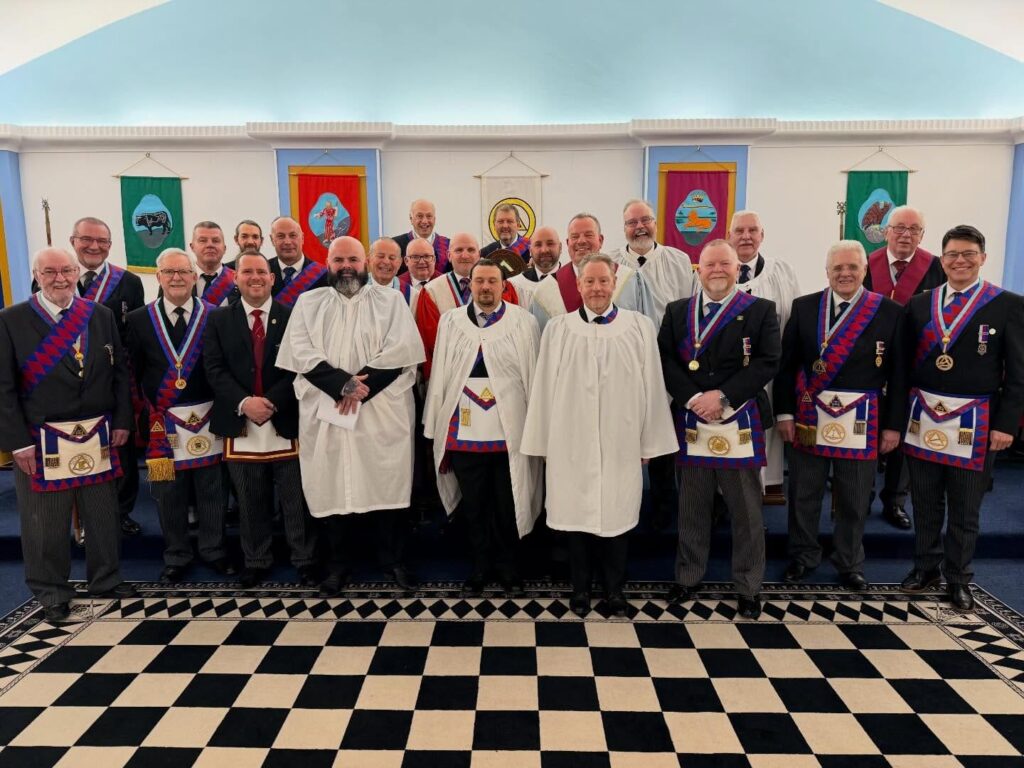
H3: Do Dutch Freemasons wear aprons like in movies?
Yes – the white leather apron is universal. Dutch Masons wear a simple apron with blue trim (the color of the Grand Orient).
H3: Can a foreigner join a Dutch lodge?
Yes. If you live in the Netherlands and speak Dutch (or join an English-speaking lodge – a few exist for expats), you are welcome.
H3: Is Freemasonry popular among Dutch politicians?
Historically yes – several prime ministers were Masons (e.g., Pieter Cort van der Linden). Today, most politicians do not disclose membership due to privacy, but no law forbids it.
H2: Conclusion – Are There Freemasons in the Netherlands? Absolutely.
Freemasonry in the Netherlands is alive, active, and historically significant. With 6,000 members, 160 lodges, and a museum in The Hague, Dutch Masonry offers a unique “liberal” variant that differs from the Anglo-American tradition but remains legitimate and respected.
If you are a Dutch man (or woman – through the separate order) who believes in a Supreme Being and wants to pursue self-improvement through charity, philosophy, and brotherhood, a Dutch lodge may be the right fit.
To take the next step: Visit www.newworldorderofficial.com and click “Word vrijmetselaar” (Become a Freemason).
| Anchor Text | URL |
|---|---|
| Official website of Dutch Freemasonry | https://www.vrijmetselarij.nl |
| Museum de Vrijmetselarij | https://www.museumdevrijmetselarij.nl |
| Dutch Grand Orient history page | https://www.vrijmetselarij.nl/over-ons/geschiedenis |
| Lodge L’Union Royale | https://www.lunionroyale.nl |
| Wikipedia – Vrijmetselarij in Nederland | https://nl.wikipedia.org/wiki/Vrijmetselarij_in_Nederland |
| UGLE worldwide recognition list | https://www.ugle.org.uk/about-freemasonry/worldwide-freemasonry |
| Dutch Catholic Church on Freemasonry | https://www.kerkrecht.nl/onderwerpen/vrijmetselarij |
| Lodge finder | https://www.vrijmetselarij.nl/word-vrijmetselaar |
| Women’s Grand Orient | https://www.vrijmetselarij-vrouwen.nl |