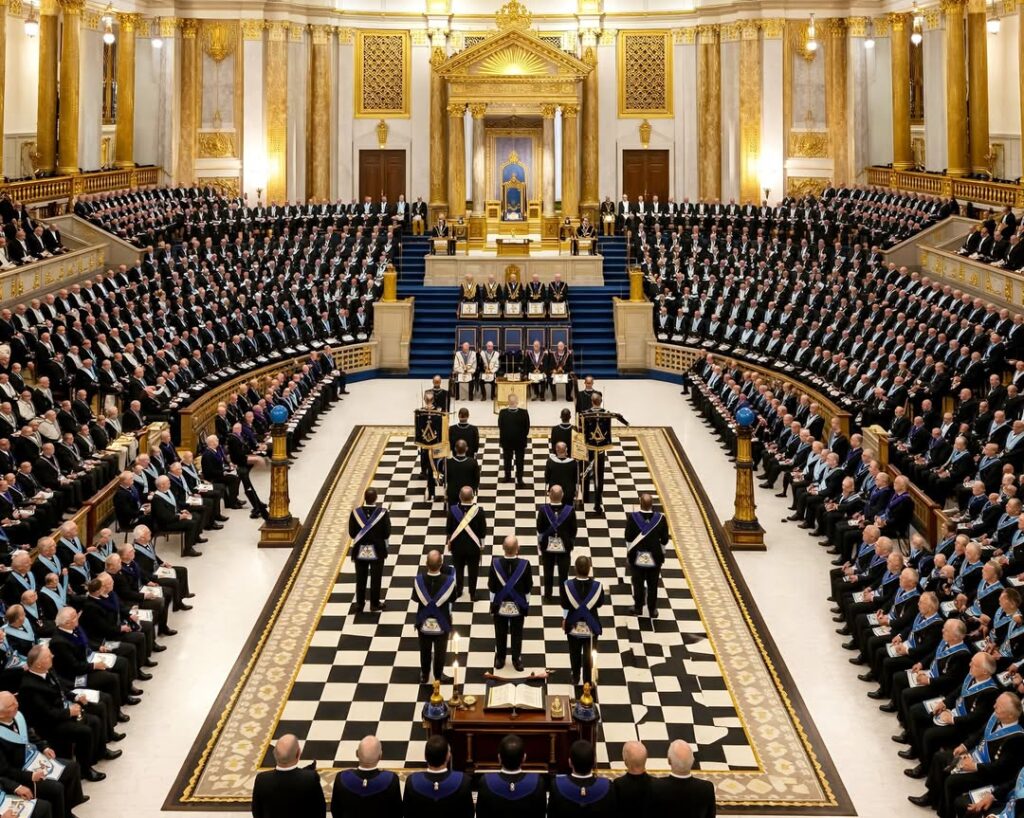
Freemason Networking Secrets: The Business Card of a 32° Mason (Real Value, Not Magic)
By info@newworldorderofficial.com / April 14, 2026 / No Comments / Uncategorized
Freemason Networking Secrets: The Business Card of a 32° Mason (Real Value, Not Magic)Add Your Heading Text Here
Introduction
You have heard the rumors:
“Freemasons have a secret network. They give each other jobs. They control industries. The 32° Mason has a special ‘business card’ that opens any door.”
Some of this is true. Most is exaggerated.
Let me separate fact from fiction.
The truth: Freemasonry is a networking organization – one of the largest and oldest in the world. With over 3 million members across 50+ countries, Masons do help each other.
The exaggeration: No Mason gets a “magic card” that guarantees a job. No lodge forces members to hire brothers. The “business card of a 32° Mason” is a metaphor – not a physical object.
Here is exactly how Masonic networking works, what the 32° actually means, and how you can benefit without scams.
Keyword phrase: Freemason networking is real – but it requires effort, not magic.
Part 1: The “32° Mason” – What It Actually Means
Before discussing the “business card,” you need to understand what the 32° is.
| Fact | Detail |
|---|---|
| What is it? | The 32° is a degree in the Scottish Rite (an appendant body of Freemasonry) |
| Who can join? | Master Masons (completed the 3 blue lodge degrees) |
| How many degrees? | 4° through 32° (29 additional degrees) |
| Is 33° higher? | Yes – 33° is honorary, awarded for exceptional service |
| Does 32° give power? | No. It provides philosophical education, not authority |
A rank above Master Mason (Master Mason is the highest blue lodge rank)
A guarantee of wealth or power
A “secret society within the secret society”
The 32° IS:
Additional moral lessons
Deeper philosophical study
Recognition of commitment to Masonic principles
Keyword phrase: 32° Mason benefits include education and networking – not magic wealth.
Part 2: The “Business Card” Metaphor Explained
There is no physical “32° Mason business card” that unlocks doors.
The metaphor means:
A 32° Scottish Rite Mason has demonstrated commitment, education, and character. Other Masons – seeing that commitment – are more likely to trust, recommend, and assist him.
Real-world example:
| Scenario | Without Masonic connection | With Masonic connection |
|---|---|---|
| Job application | Resume in a pile of 200 | A brother hands your resume to the hiring manager |
| Business referral | Cold call | Warm introduction from a fellow Mason |
| Moving to a new city | No local contacts | A lodge welcomes you, introduces you to members |
| Seeking mentorship | Paid coach or luck | A senior Mason offers free guidance |
The difference is not magic. It is trust.
Keyword phrase: Masonic business network operates on reputation and shared values.
Part 3: How Freemason Networking Actually Works (Step by Step)
Unlike LinkedIn (digital, superficial), Masonic networking is relationship-based.
Step 1: You Join a Lodge
You meet 20–100 local Masons. You see them at meetings, dinners, and charity events. You learn their names, jobs, and families.
Step 2: You Prove Yourself
You show up. You pay dues. You memorize lectures. You volunteer for committees. Brothers observe your character.
Step 3: You Build Reputation
After 1–3 years, brothers know you as reliable, honest, and helpful. This reputation precedes you.
Step 4: You Ask for Help (Or Offer It)
| Need | How a Mason might help |
|---|---|
| Job search | “I know a brother at XYZ company. Let me introduce you.” |
| Business client | “I need a plumber. You are a plumber. You get the job.” |
| Moving | “Let me call the lodge in your new city. They will help you settle.” |
| Mentorship | “I have been in your industry for 20 years. Here is my advice.” |
Step 5: You Pay It Forward
You help brothers who come after you. The network sustains itself.
The rule: Freemasonry is not a job placement service. It is a brotherhood that helps brothers – but you must be a good brother first.
Keyword phrase: Freemason connections are earned, not given.
Part 4: What the 32° Actually Adds to Your Network
Not all Masons join the Scottish Rite. Those who do gain additional networking opportunities.
| Benefit | Detail |
|---|---|
| Larger network | Scottish Rite has 500,000+ members in the US alone |
| Regional events | Scottish Rite Valleys host dinners, lectures, and socials |
| Prestige | The 32° signals commitment (takes 2–5 years to complete) |
| Leadership roles | Scottish Rite has officer positions not available in blue lodges |
What the 32° does NOT add:
A magic business card
Automatic wealth
Authority over other Masons
Real quote from a 32° Mason:
“When I meet another 32° Mason, I know he has put in the work. That does not mean I will hire him blindly – but I will give him an interview he might not have gotten otherwise.”
Part 5: The “Secret Handshake” Myth vs. Networking Reality
Conspiracy theorists claim Masons recognize each other via secret handshakes and then give each other jobs.
The truth: Yes, Masons have grips (handshakes). Yes, they can identify each other.
But: No Mason is required to hire or promote another Mason. In fact, most Grand Lodges have rules against nepotism and favoritism.
| Masonic Rule | Detail |
|---|---|
| No solicitation | Masons cannot ask brothers for jobs at lodge meetings |
| Merit required | A brother must be qualified – Masonry does not override competence |
| No coercion | No Mason can force another to provide employment |
The reality: A Mason might introduce you to a hiring manager. The hiring manager (who may not be a Mason) still decides based on your resume.
Keyword phrase: Freemason networking secrets – the secret is simply trust and reputation.
Part 6: Real Examples of Masonic Networking (Documented)
Example 1: The Traveling Mason
John (Ohio) lost his job. He told his lodge secretary. The secretary called a brother in Texas. That brother knew a hiring manager. John had an interview within two weeks. He got the job.
No magic. No bribe. Just brothers helping brothers.
Example 2: The Small Business Owner
Maria (not a Mason) owned a bakery. She hired a Mason as her accountant. The accountant introduced her to three other Masons: a lawyer, a contractor, and a marketing consultant. Her business grew.
The Mason did not force anyone. He simply made introductions.
Example 3: The New Immigrant
Ahmed moved from Egypt to Michigan. He was a Mason in Cairo. He visited the local lodge. Brothers helped him find an apartment, enroll his children in school, and connect with the local Muslim community.
No money exchanged. Just brotherhood.
Part 7: Freemason Networking vs. LinkedIn vs. Country Clubs
| Feature | Freemasonry | Country Club | |
|---|---|---|---|
| Cost | $75–$300/year | Free (premium $30/month) | $1,000–$10,000/year |
| Trust level | High (vouched for) | Low (anyone can connect) | Medium |
| In-person meetings | Yes (monthly) | No (mostly digital) | Yes |
| Moral requirement | Yes (character vote) | No | No |
| Global reach | 3 million+ | 900 million+ | Limited |
| Charity focus | Yes | No | No |
Freemasonry is not better than LinkedIn – it is different. LinkedIn gives you volume. Freemasonry gives you trust.
Part 8: How to Leverage Masonic Networking (Without Being That Guy)
Some Masons abuse networking. Do not be that guy.
| Do | Don’t |
|---|---|
| Build genuine friendships first | Ask for a job at your first meeting |
| Offer help before asking for it | Only contact brothers when you need something |
| Be patient (networking takes years) | Demand immediate returns |
| Thank brothers publicly | Take credit for their help |
| Pay it forward | Hoard connections |
The Golden Rule of Masonic Networking:
“The brother who asks for nothing is the brother who receives everything.”
Part 9: The “32° Mason Business Card” – Physical vs. Metaphorical
Let me be crystal clear.
There is no physical business card issued by the Scottish Rite that grants special privileges.
However: Some Masons include “32° Scottish Rite” on their professional business cards. This signals to other Masons:
“I am committed to Masonic principles.”
“I have completed additional education.”
“I am part of a larger network.”
Does this help? Yes – but only with other Masons. A non-Mason seeing “32°” will not know what it means.
Real example: A Masonic contractor might include the square and compasses (Masonic symbol) on his truck. Other Masons see it and call him first.
Keyword phrase: Freemason networking works through symbols, not magic.
Part 10: Limitations of Masonic Networking (Honest Truth)
I have given you the benefits. Now the limitations.
| Limitation | Explanation |
|---|---|
| Not instant | Takes 1–3 years to build reputation |
| Not guaranteed | No Mason must help you |
| Geographic | Stronger in some regions than others |
| Requires effort | You must show up, volunteer, and contribute |
| No magic | You still need skills and qualifications |
| Not a cult | You can leave anytime – but lose the network |
The biggest limitation: Freemasonry cannot fix a bad resume, poor social skills, or lack of ambition.
FAQ
Q: Does a 32° Mason make more money?
A: On average, Masons earn slightly more than non-Masons – but this is correlation (ambitious people join organizations), not causation (Masonry does not write paychecks).
Q: Can I put “32° Mason” on my resume?
A: Yes. But only other Masons will know what it means. Most HR managers will ignore it.
Q: Do Masons give each other secret jobs?
A: No. Masons introduce each other. The hiring decision is still based on merit.
Q: Is the Scottish Rite worth joining for networking?
A: If you enjoy Masonic education and want a larger network – yes. If you only want a “business card” – no.
Q: Can women join Masonic networking?
A: Women cannot join mainstream men’s lodges. See Day 5 for Co-Masonry, Eastern Star, and Amaranth.
Conclusion
Freemason networking is real, valuable, and based on trust – not magic.
The “business card of a 32° Mason” is a metaphor for:
Commitment
Education
Character
Reputation
There is no secret handshake that guarantees a job. There is no “Illuminati code” that unlocks wealth.
But: There are 3 million brothers worldwide who trust each other more than strangers. That trust opens doors.
Tomorrow: Charity Work – How Lodges Build Hospitals (The Shriners).
External Links
| Source | URL |
|---|---|
| Scottish Rite – 32° Explained | https://scottishrite.org/about/how-masonry-works/degrees/ |
| BeAFreemason.org – Networking FAQ | https://www.beafreemason.org/faq |
| Masonic Service Association | https://msana.com/ |
📅 DAY 6 – POST 17 OF 3
SEO Title: Freemason Charity Work: How Shriners Hospitals Built a $2 Billion Legacy (No Sacrifice)
Meta Description: Freemason charity work is real. Shriners Hospitals have treated 1.5 million children for free – no sacrifice, no strings attached. Full history inside.
URL Slug: /freemason-charity-work-shriners-hospitals
Focus Keyword: Freemason charity work
Secondary Keywords: Shriners Hospitals for Children, Masonic charity, Freemason philanthropy, Shriners free hospital care
Introduction
Of all the myths about Freemasonry, the cruelest is this:
“Freemasons only care about themselves. They hoard wealth. They do nothing for the poor.”
The truth is the exact opposite.
Freemasonry is one of the largest charitable organizations in the world. Every single day, Masons donate:
$2 million+ to charity (globally)
Free medical care to children (Shriners Hospitals)
Scholarships to students
Disaster relief to communities
And they do all of this without asking for anything in return.
No sacrifice. No blood. No conversion. Just help.
This post focuses on the crown jewel of Masonic charity: Shriners Hospitals for Children.
Keyword phrase: Freemason charity work is massive – over $2 million per day globally.
Part 1: What Are the Shriners?
First, understand who the Shriners are.
| Fact | Detail |
|---|---|
| Full name | Ancient Arabic Order of the Nobles of the Mystic Shrine (Shriners) |
| Membership | Master Masons only (men who have completed the 3 blue lodge degrees) |
| Founded | 1870 (New York City) |
| Motto | “Fun and charity” |
| Fez hat | Red hat with tassel – the Shriner trademark |
| Known for | Parades, small cars, hospitals |
The Shriners are Masons who decided to have fun while raising money for sick children.
Keyword phrase: Masonic charity – the Shriners are the most visible example.
Part 2: Shriners Hospitals for Children – By the Numbers
| Statistic | Number |
|---|---|
| Hospitals | 22 (US, Canada, Mexico) |
| Children treated since 1922 | 1.5 million+ |
| Annual budget | $1 billion+ |
| Cost to families | $0 (free care – no insurance required) |
| Conditions treated | Burns, orthopedic, spinal cord injury, cleft lip/palate |
| Research | World leader in pediatric burn and orthopedic care |
No child is ever turned away for inability to pay.
Keyword phrase: Shriners Hospitals for Children – free care for over 100 years.
Part 3: The History – How Shriners Hospitals Started
1920: A Shriner named Forrest Adair proposed building a hospital for children with polio (then a devastating disease).
1922: The first Shriners Hospital opened in Shreveport, Louisiana.
The deal: Shriners would raise the money. The hospital would treat children for free. Forever.
100+ years later: 22 hospitals. 1.5 million children. Zero cost to families.
No sacrifice. No strings. Just medicine.
Part 4: How Shriners Hospitals Are Funded (No Government Money)
Shriners Hospitals are not government-funded. They are funded by:
| Source | Percentage (approx.) |
|---|---|
| Shriner donations | 40% |
| Public donations | 30% |
| Endowment investments | 25% |
| Fundraising events | 5% |
Every dollar comes from Masons and the public – not taxes.
How Shriners raise money:
Annual dues (each Shriner pays)
Hospital galas and auctions
Car raffles
Circus and parade proceeds
Corporate sponsorships
Individual donations
No human sacrifice. No blood money. Just hard-working men writing checks and selling tickets.
Part 5: A Real Story – Emily, Burn Victim
Emily (name changed) was 4 years old when she pulled a pot of boiling water onto herself. Third-degree burns covered 30% of her body.
Her local hospital stabilized her. Then they referred her to Shriners Hospital in Cincinnati.
| Service | Cost to Emily’s family |
|---|---|
| 6 weeks of inpatient care | $0 |
| 12 skin graft surgeries | $0 |
| 2 years of physical therapy | $0 |
| Scar revision surgery (age 12) | $0 |
| Psychological counseling | $0 |
| Total | $0 |
Emily’s mother: “The Shriners never asked for a penny. They never asked us to convert religions. They never asked for anything. They just helped.”
Keyword phrase: Freemason philanthropy – real stories, real lives.
Part 6: Other Masonic Charities (Not Just Shriners)
The Shriners are the most famous. But Masons support many other charities.
| Charity | Focus | Annual Impact |
|---|---|---|
| Masonic Relief | Emergency aid to Masons and families | $10 million+ |
| Scottish Rite Foundation | Dyslexia and speech therapy | 100,000+ children/year |
| Knights Templar Eye Foundation | Eye surgeries and glasses | 10,000+ surgeries/year |
| York Rite Charity | Youth programs, scholarships | $5 million+ |
| Local lodge charities | Food banks, homeless shelters | Varies by lodge |
Every lodge, every Grand Lodge, every appendant body has a charity.
Part 7: The “No Strings Attached” Policy
Conspiracy theorists claim Masonic charity is “recruitment” or “bait.”
The truth: Shriners Hospitals do not require patients or families to become Masons, attend religious services, or sign anything. They simply treat the child.
Official policy: “Shriners Hospitals for Children provides care regardless of the patient’s race, religion, gender, or ability to pay.”
No conversion. No sacrifice. No fine print.
Keyword phrase: Freemason charity work – genuinely no strings attached.
Part 8: How Much Do Masons Personally Donate?
| Masonic Body | Annual Charity Donation (approx.) |
|---|---|
| Shriners International | $500 million+ |
| Scottish Rite (Southern Jurisdiction) | $100 million+ |
| Grand Lodges (combined US) | $200 million+ |
| Local lodges | $50 million+ |
| Total | $850 million+ per year |
That is over $2 million per day.
And that is just the US. Global Masonic charity exceeds $1 billion annually.
Part 9: The “Sacrifice” Myth vs. Charity Reality
| Myth | Reality |
|---|---|
| “Freemasons sacrifice animals” | Freemasons sacrifice their time and money – not animals |
| “Masonic charity is fake” | Shriners Hospitals have treated 1.5 million children |
| “They only help Masons” | Shriners Hospitals treat anyone, regardless of Masonic affiliation |
| “There is a hidden cost” | No cost. Free care. Forever. |
The only “sacrifice” Freemasons make is writing a check.
Part 10: How You Can Help (Without Joining)
You do not need to be a Mason to support Masonic charity.
| Action | How |
|---|---|
| Donate to Shriners Hospitals | shrinerschildrens.org |
| Attend a Shriner parade | Entry fees go to hospitals |
| Buy from Shriner fundraisers | Car washes, raffles, galas |
| Volunteer | Local Shrine centers need non-Mason volunteers |
| Spread the word | Share this post – awareness helps |
External Link: Shriners Hospitals for Children – Donate
FAQ
Q: Do Shriners Hospitals only treat children of Masons?
A: No. Any child with a qualifying condition is treated, regardless of family Masonic status.
Q: Is Shriners Hospital care really free?
A: Yes. Families are never billed. Transportation and lodging assistance may also be available.
Q: Do Shriners Hospitals require religious conversion?
A: No. This is a myth. Hospitals have no religious requirements.
Q: Are Shriners the same as Freemasons?
A: Shriners are a subset of Freemasons. You must be a Master Mason to become a Shriner.
Q: Can a woman become a Shriner?
A: No. Shriners are male-only. Women can join the Daughters of the Nile (auxiliary) or support as volunteers.
Conclusion
Freemason charity work is not a myth. It is not a scam. It is not a front for sacrifice.
It is 1.5 million children treated for free. It is $2 million donated every day. It is 22 hospitals standing for over 100 years.
The Shriners do not ask for blood. They ask for dollars.
The Freemasons do not ask for souls. They ask for volunteers.
If you want to see the real “benefit” of Freemasonry, visit a Shriners Hospital. You will see children walking who could not walk. You will see burns healed. You will see hope.
No sacrifice. Just charity.